In my first semester as a Fellow at the Center of Public Humanities, I’m working on editing and finalizing previous students’ stories for Harrisburg Historical‘s website and mobile app and beginning to research my own story. Many of the stories for Harrisburg Historical were nearly ready to be published before I joined the CPH. My task is to copyedit them, double-check facts, and fill in any missing details relevant to the story. Additionally, I’m attaching “factoids” to each narrative. Factoids are small nuggets of information, or facts, that give the reader additional details about the story.
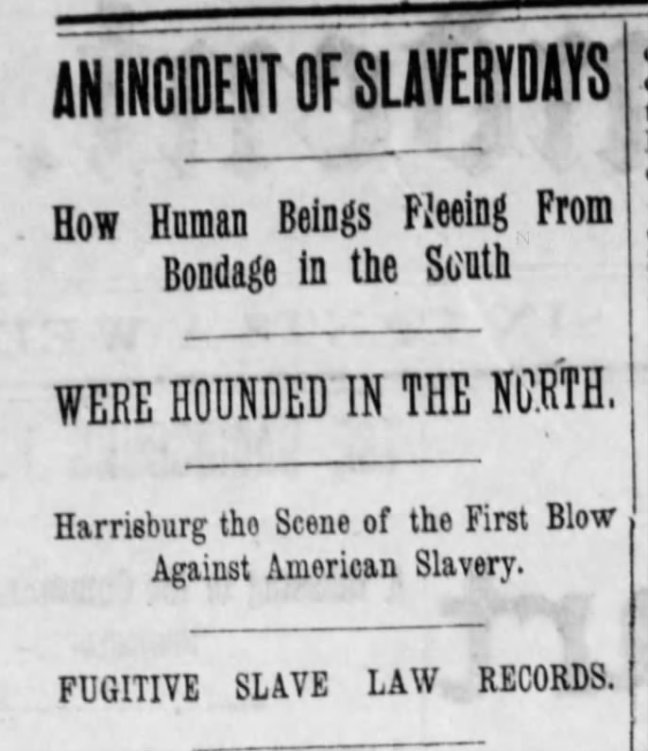
I’ve also started researching my own story for Harrisburg Historical. In August 1850, just before the passage of the Fugitive Slave Act, three freedom seekers, Samuel Wilson, George Brooks, and a man called Billy, fled Virginia for Pennsylvania. Their enslavers pursued and had them arrested in Harrisburg for stealing horses. A judge acquitted the three men but ruled their enslavers had a right to return them to slavery. When the enslavers entered the jail to reclaim the men, the slaves resisted. Members of Harrisburg’s African American community rushed to the freedom seekers’ defense, resulting in a bloody brawl inside the jail. The event highlights Black resistance to unjust treatment and their willingness to fight for one another.

Working at the CPH has been an enormously enriching experience. Because I’ve been functioning as an editor, researcher, and writer, I’ve appreciated the depth and rigor of the content my peers have created for Harrisburg Historical. Each story is its own piece, but they also converse with each other, drawing a line through Harrisburg’s rich African American history. Eventually, these stories will be incorporated into a tour around the Capitol complex so people can acknowledge places of significance in Harrisburg’s quest for equality.
I joined the CPH because I looked forward to contributing public-facing content that can deepen our community’s understanding of Harrisburg’s history. The CPH’s goal is to tell these stories in an engaging and accessible way to ensure that the widest possible audience can learn from them. Writing publicly and learning to think like a historian are two areas where I’ve already seen myself grow professionally. I’d like to thank Dr. David Pettegrew for his support and guidance as I find my place at the Center of Public Humanities, and I’m excited to continue the good work of so many who’ve come before me.
J.T. Crocenzi is a senior at Messiah University. He is an English major with a concentration in literature.
 Digital Harrisburg