
By, Ben Andrasi
During my college journey, I discovered a course on digital history, which got my attention. In our class we read parts of the article “What is Digital History?” by Seefeldt and Thomas. We learned that digital history is an expansive term for the numerous ways in which people today engage with and learn about history, utilizing modern technology. This includes many platforms, from interactive websites and documentaries to online databases and social media discussions. It involves the digitization of vast amounts of historical material, making it accessible to a global audience. Over the past several decades, historians have worked to digitize archives, ensuring that important resources are available online.
In our digital history class, we explored not only the significance of this field but also learned the technical skills necessary to digitize documents and images effectively. For our final project, we researched a specific event or location in Harrisburg, Pennsylvania. I chose to research the St Patrick’s Day flood of 1936.
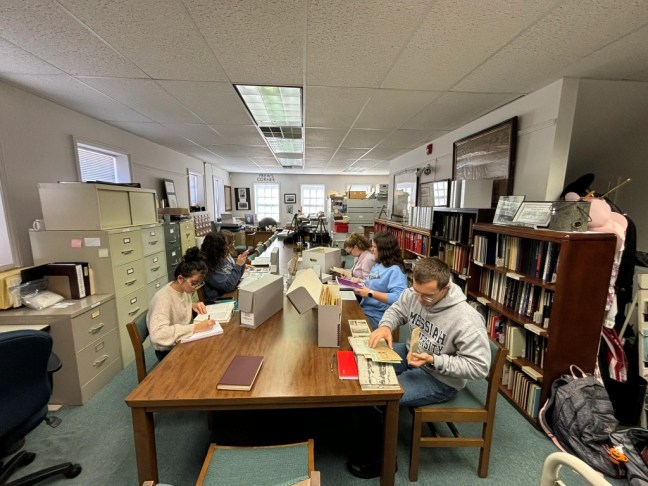
During my research for this project, I had the opportunity to visit two archives: the Pennsylvania State Archives and the Dauphin County Archives. At both locations, I explored several collections in search of valuable information, although my findings were a mix of useful and less useful sources.
At the Pennsylvania State Archives, I reviewed the Samuel W. Kuhnert Collection (MG281). While this collection provided a lot of photographs, it unfortunately lacked the detailed information I had hoped for. Although the images were visually interesting, they didn’t offer much insight into the historical context I needed for this project.
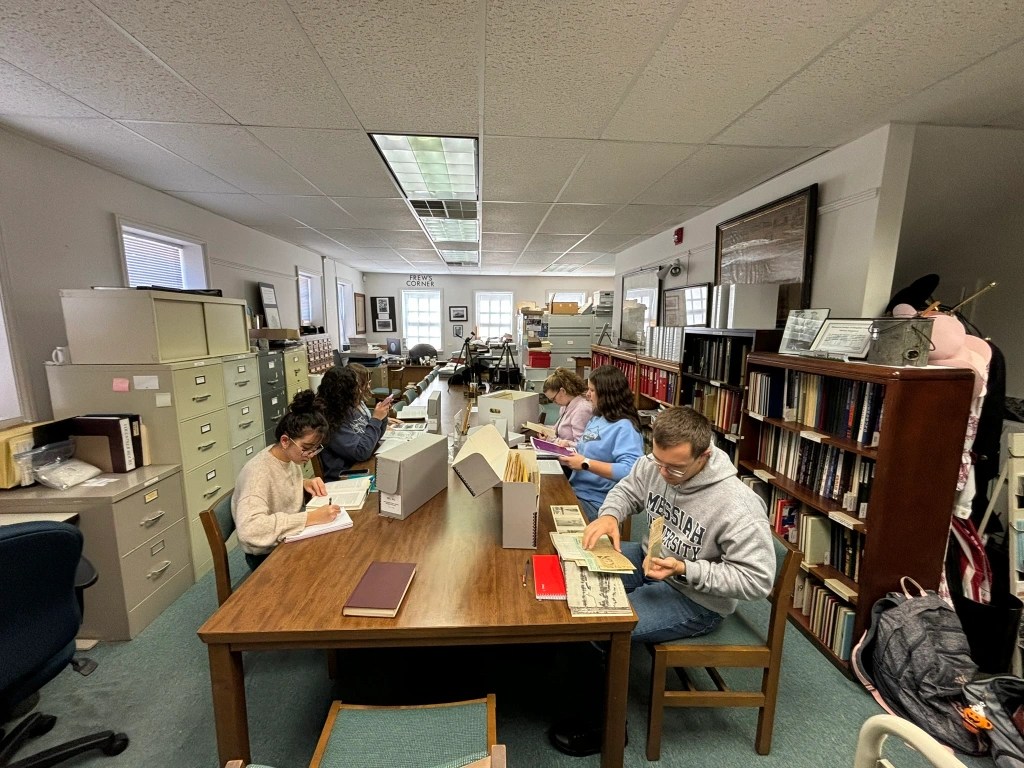
My visit to the Dauphin County Archives proved to be far more rewarding. The Floods in Harrisburg Collection (MG 746) turned out to be a fantastic resource. It contained a wealth of primary sources, including personal accounts from individuals who lived through the flood. These testimonies added a first person perspective to the historical event, giving this project authentic voices from people who were affected. Additionally, the collection included several newspaper clippings, which helped to tell the story of the flood in the eyes of local news coverage at the time. Some photographs from the era also provided a vivid visual of the devastation. A particularly fascinating part of the collection was a series of notes from first responders. These documents contained information of the number of people who had to be evacuated due to the rising waters. These resources have helped me build a solid foundation for my research.
After my two trips to the archives I was still looking for more primary sources. I started to look on Newspaper.com for some newspaper articles on the event and found plenty of newspapers not only from 1936 but from later on talking about the flood. These newspapers were a great way to help me to start breaking this story into different parts. Before reading these newspapers, I just had a bulk information word document telling the story in one shot without looking at different places all that much. Now I have different places that I can branch out and tell a story or share some data on a particular area.

Aerial view of 1936 flood (from Dauphin County Historical Society)
Once I had all this information typed out and organized, I created a Story Map website to display my work. By digitizing this information, I hope that people can have better access to information regarding the St. Patrick’s Day Flood. This project allowed me to merge historical research with modern technology, showcasing the potential of digital history to preserve and share stories that might otherwise remain buried in archives. What makes digital history so powerful is its ability to bring the past to life in ways that are both engaging and accessible. By blending primary sources with digital tools, this project transforms a local historical event into an educational experience for a global audience. As I reflected on the journey of researching and creating this project, I realized how digital history doesn’t just preserve the past but also invites new generations to engage with it in meaningful ways. I hope that my work inspires others to explore their local histories, ensuring that these stories are never forgotten.
Feel free to visit my website to learn more about the St Patrick’s Day flood of 1936 https://arcg.is/zCiXW0

Ben Andrasi is a History major at Messiah University.
 Digital Harrisburg