
Amish buggies, Great Danes, Butterscotch Krimpets. All of these were nominated to be on the Pennsylvania state quarter in 1999 because someone thought they represented Pennsylvania. None of these were finalists for the Pennsylvania state quarter, though a ruffed grouse and eastern hemlock tree were. The official chosen quarter features the state outline, a keystone, the state motto, and the statue Commonwealth. At the beginning of this semester, I set out to learn more about the Pennsylvania state quarter, the process behind creating it, and the symbols that are on it. This journey in the Digital History course took me to the Pennsylvania State Archives, the Dauphin County Historical Society Archives, and the Internet Archives.
The Pennsylvania State Archives houses many of the state quarter nominations that people sent to Harrisburg, including emails, drawings, worksheets, and more. Archival research can be time-consuming because you have to look through piles of documents for ones that will be helpful while also digitizing any you might want to display. It is an interesting process because I was looking at materials from the past but trying to determine which ones people will be most interested in in the future so I could prioritize digitizing those.
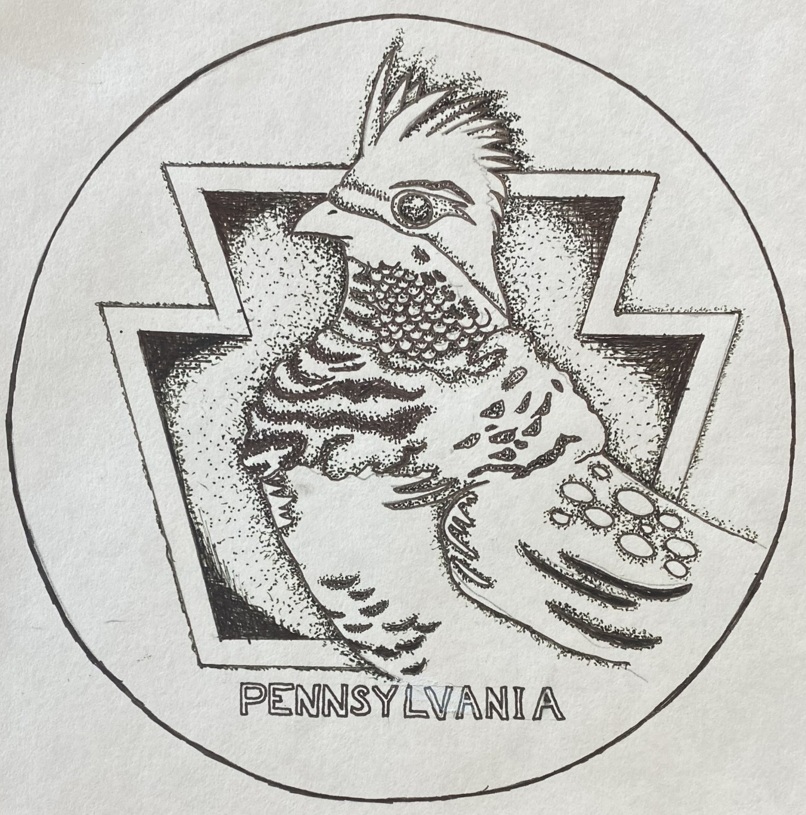
When we went with our class, I looked through and digitized many of the nominations to use as pictures for my project since making physical materials accessible is one of the most important parts of digital history. I found many recommendations that depicted the state outline, a keystone, and the state motto, yet I did not see any that mentioned the statue Commonwealth. The statue was sculpted by Roland Hinton Perry and installed on the top of the Pennsylvania capitol building’s dome on May 25, 1905. The three-ton, 14’6” statue stands over Pennsylvania’s capitol, raising her staff in justice and extending her hand in mercy. It was this gilded woman that was chosen to represent Pennsylvania in the 50 State Quarters Program.
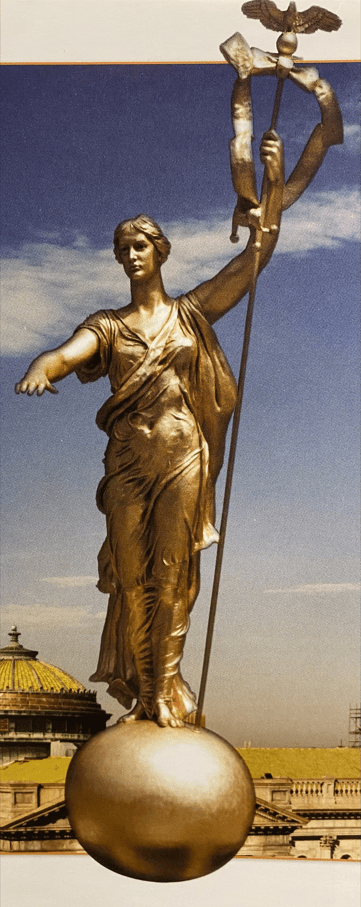
The project I created around the statue Commonwealth followed the Pennsylvania state quarter’s journey from Congressional act to design to circulation. The 50 State Quarters Program was so financially successful that the Treasury has created several more quarter programs since then. One of them features Gettysburg National Military Park, for which Perry created two monuments. It was also numismatically successful with an estimated 147 million people collecting the state quarters in May 2005. The main purpose of the 50 State Quarters Program was to honor and represent each of the 50 states. According to capitol architect Joseph Huston in Literature in Stone by the Pennsylvania Capitol Preservation Committee, Commonwealth is “the symbolic embodiment of the Commonwealth of Pennsylvania,” making her a great representative for the state.
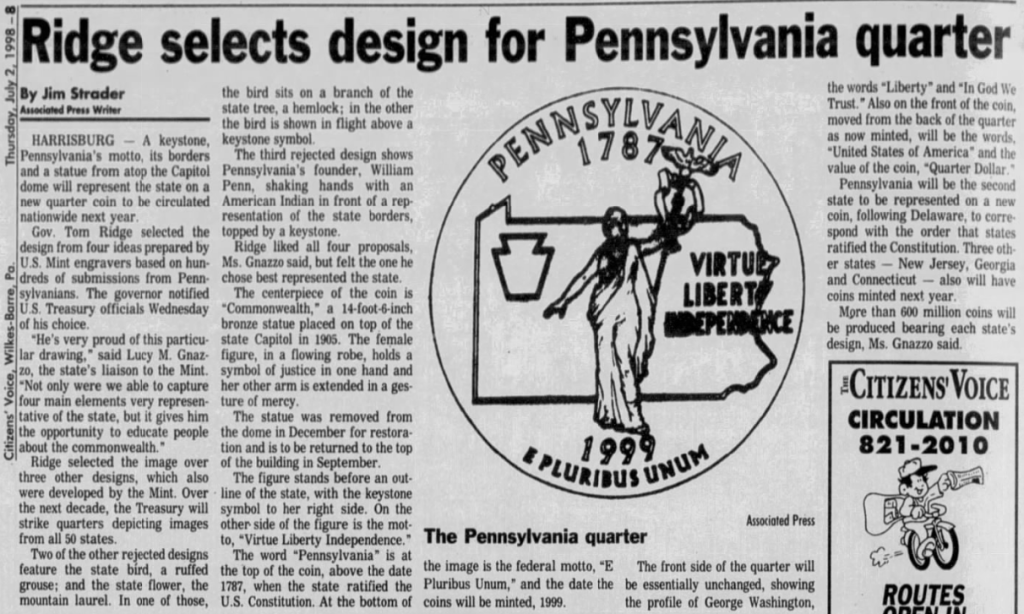
I explored the symbols on the state quarter, their significance for the state, and why they were chosen to represent Pennsylvania to the rest of the country. All four of the items on the quarter represent Pennsylvania’s history, origins, and values. This is why the Commemorative Quarter Committee suggested them, the Citizens Commemorative Coin Advisory Committee and the Secretary of the Treasury approved them, and Governor Tom Ridge ultimately chose them. Like the process behind developing the Pennsylvania state quarter from idea to circulation, my project took my outside of the Digital History course to several archives. The work I completed did not result in a new state quarter, but it did end with the creation of this StoryMap about the Pennsylvania state quarter, including its journey, its purpose, and digitized archival designs of several of the nominations.
Emmy Varner is a senior at Messiah University. She is majoring in public history and minoring in creative writing and education.
 Digital Harrisburg