With December comes the end of the semester and the culmination of projects and finals. This semester in Digital History, I learned and did a lot. I learned to make a website, curate images, and how to collect data for history. All the labs we did throughout this semester were to teach us and lead us to our final projects.
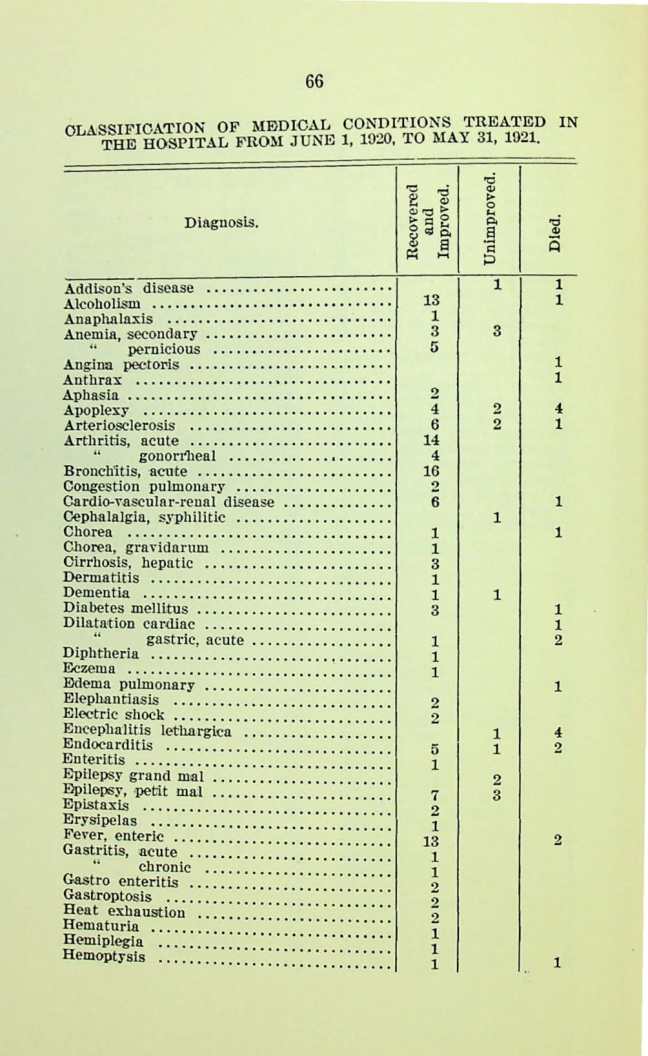
When I had to pick, I decided on contagious diseases because I thought that sounded interesting especially since we just went through a global pandemic a couple of years back. We went to two different archives over the course of this semester to compile information about our subjects, one being the Pennsylvania State Archives and the other being the Historical Society of Dauphin County. From there I was able to gather information about what diseases were affecting Harrisburg, when, and what they tried to do to prevent the diseases.


Images taken by author at the Historical Society of Dauphin County
My research takes place in the early 20th century in Harrisburg, particularly between 1906-1938. I learned a lot about the Diphtheria outbreak in 1906-1908 through a record book that the Pennsylvania State Archives had. That book is what first got me interested in Diphtheria and made me realize that there was an outbreak because as I kept flipping, it would just be pages of people having Diphtheria. I also learned a lot about it through old newspapers about how they combated it and treated it. In my research, I ran across names of buildings repeatedly, which was good for my Story Map. Story Map is a website platform where you can add the story you want to write, with a map feature telling your readers where your story is taking place. Our Story Maps are based in locations that our stories revolve around, so places that kept popping up in my research were Steelton and the Seventh Ward, plus a few other places that were quite as prominent but still important. In my research in the archives, I did not really gather place-based materials, mostly just the different diseases that affected people. So, thankfully, I was able to do some research online and find information associated with places in old newspaper clippings and in research that other Messiah students have done on this subject. From that data I was able to pick out places of importance to the spread of disease and the treatment of it.
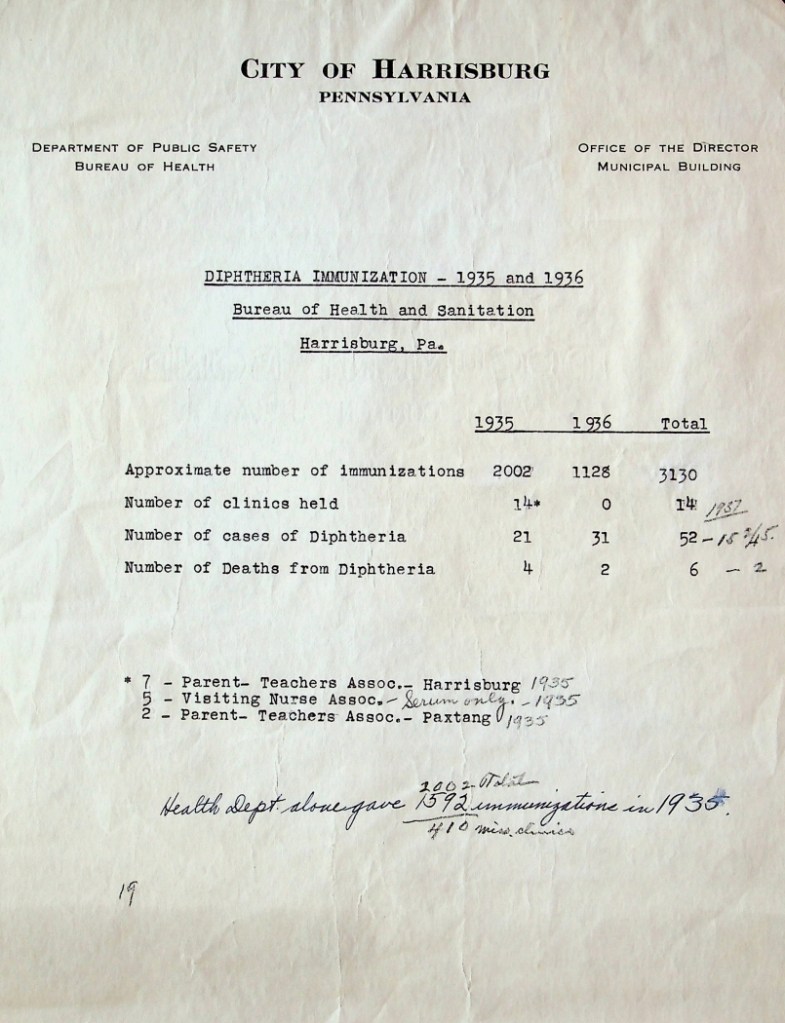


Images taken by author at the Pennsylvania State Archives.
This project definitely did not turn out quite as I initially thought it would. I thought I would gather a lot of data and come up with this amazing revelation of information, but I did not have enough time this semester to go as in depth as I would have liked. I saw previous Messiah students have amazing data analysis from their research into contagious diseases, and I would have loved to do that. Sarah Wilson, for example, generated a map of cases of the Spanish Influenza to see patterns. Another student made a pie chart with which ward had the most cases of Measles. But, I still think it turned out fairly well. I focused my research more broadly, touching on a lot of diseases and topics to give a huge overview of Harrisburg’s history with disease. I touched on the Spanish Influenza, Diphtheria, Measles, and Scarlet Fever, with the topics of medicine, economics, emergency procedures, and residential. I learned that Harrisburg faced and dealt with disease fairly similar to how we have now, certain populations were hit harder, and the economic impacts of being continuously hit with diseases. But I also learned about Harrisburg’s resilience amidst their struggles, which was far more evident than anything else.
To learn more about how Harrisburg dealt with their diseases in the early 20th century and what those diseases were like, you can read about it on my story map.
With that is the end of this class. I can honestly say that this class has taught me a lot of helpful information for my future life as a historian and I am thankful for that. But, I can also honestly say that I am thankful that it is over. This class was very educational but I feel like I left with a headache every time I had this class due to all the new things I was learning and trying to wrap my mind around. But it is good to learn new things, and I will forever be grateful for this experience.
Emmy Fogle is a sophomore studying Public History at Messiah University. She has minors in Art History and Classical, Medieval, and Renaissance Studies. She has been an intern for the Brethren in Christ Archives and is a Fellow for the Center for Public Humanities at Messiah University.
 Digital Harrisburg