Editor’s note: This is the third in a series of posts of the Center for Public Humanities at Messiah University that highlights the voices of activists, educators, and community leaders in the Harrisburg area who are advancing civil rights and preserving history. The series, titled “The Lenwood Sloan Impact,” is named in honor of the late visionary, Lenwood Sloan, whose partnership with Digital Harrisburg and the Center for Public Humanities over the years deepened our work and profoundly impacted us. For earlier essays, see “Catalytic Agents: The Lenwood Sloan Impact“ and “Reflections on Equity, Parity, and Justice: The Impact of Mr. Lenwood Sloan.”
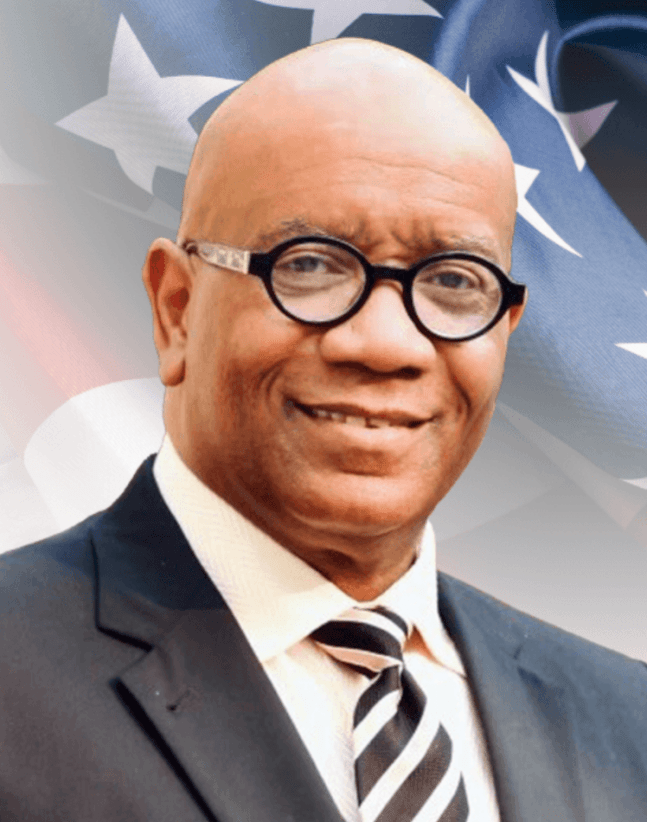
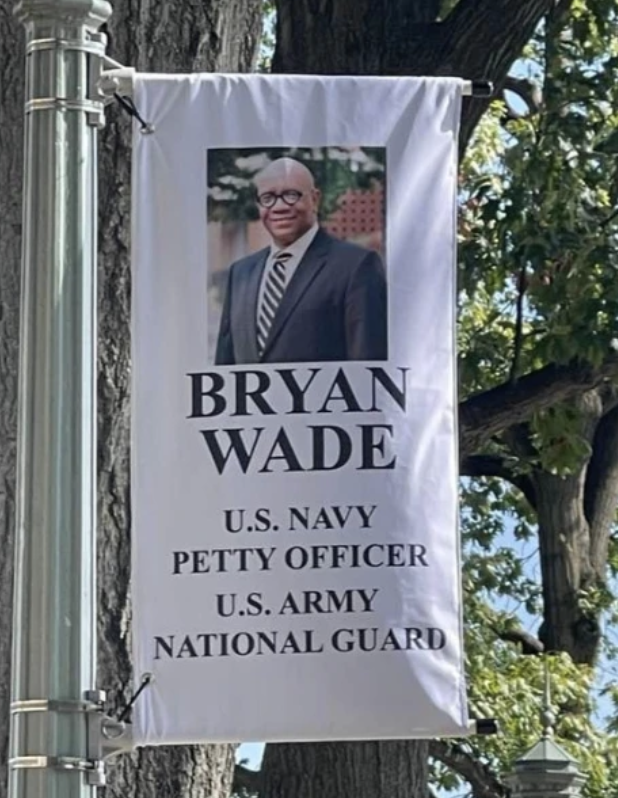
Bryan Wade is a multifaceted figure: a producer, educator, military veteran, and public historian who has dedicated his career to educating communities about African American history. At the center of his work is a clear purpose—what he describes as “informing emerging generations about the nation’s past.” Through documentary storytelling, curriculum development, and community engagement, Wade works to bring overlooked histories into public understanding.
The Call to Tell the Story
That sense of responsibility grew out of his experience as both an educator and media producer. While developing his PBS television series World Apart, Wade spent twelve years examining what he calls “the layers of race and culture” and the ways misinformation about intelligence, identity, and human worth has been reinforced through social, educational, and religious systems. His research took him to universities such as Stanford and Drexel, where he explored the historical roots of racial misconceptions. Yet what struck him most was not just the persistence of misinformation, but the lack of willingness to challenge it. “America lacks the will to deconstruct these ideas,” he explained. “Demonization will still continue to resurface itself if we don’t confront it.”
This realization led Wade to combine documentary storytelling with educational resources, ultimately shaping the Keystone Oral Histories project. His goal was not only to preserve stories, but to make them accessible and meaningful in classrooms. “When people can see themselves in a local perspective—not only Black men and women, but members from all cultures—it makes the lessons more tangible,” Wade said. “Students can see themselves in these stories.” By grounding history in lived experience, he hopes to move beyond an ‘us versus them’ mindset and instead present history as a shared human story. “I try to be a constructive agent of history,” he added. “I am open to all cultures and people.”
Keystone Oral Histories in Action
In November 2017, Wade produced Keystones: The African American Military Experience, an immersive documentary exploring Black contributions to U.S. military service from World War II through the Vietnam era. The project highlights a long tradition of service that is often overlooked, despite the fact that African Americans have fought in every American conflict since the Revolutionary War. Wade’s own service in the Navy and National Guard deepened his understanding of both the opportunities and limitations military life has offered people of color. “Opportunities are much more prevalent today,” he noted, “but there are still many sectors where the glass ceiling hasn’t been pierced.” The impact of the documentary has reached audiences in unexpected ways. After sharing clips on the popular social media platform TikTok, Wade heard from an eleven-year-old viewer who described the film as “life-changing.” In another case, a female student in a York County classroom connected personally to the material after hearing a teacher discuss her own grandmother’s story featured in the film. For Wade, these moments affirm the purpose behind thework. “Small things can go a long way,” he said. “I just want to help somebody—anybody.”
Building on this momentum, Wade later produced Underground Railroad: South Central Pennsylvania, which features interviews with historians, educators, community members, and representatives from organizations such as the Pennsylvania Historical and Museum Commission. The film highlights the region’s role in aiding freedom seekers while also acknowledging the moral contradictions that existed within local communities. By presenting multiple perspectives, the documentary invites viewers to wrestle with the complexity of the past rather than simplifying it.
Wade recently brought the film to Messiah University in 2025 for a public screening and discussion with faculty, students, and fellows from the Center for Public Humanities. The conversation emphasized the power of oral history to move beyond facts alone. As Wade explained, oral storytelling allows audiences to connect with the emotional and human dimensions of history, creating a deeper and more lasting understanding.
The Responsibility of Oral History
That human connection is central to Wade’s approach as an oral historian. “When families share their stories, I want to accurately portray not just what was said, but the essence of what they mean,” he explained. The process, he believes, carries a deeper impact for both storyteller and audience. “It does something to someone to speak about their legacy. You throw a stone, and you see the ripple effect of good energy.” Because of this responsibility, Wade focuses intentionally on stories that are constructive, meaningful, and capable of inspiring others. His commitment to preservation is also personal. Wade’s great-great-grandmother, Hannah Braxton Jones, lived in Harrisburg’s Old Eighth Ward, a historic neighborhood later demolished during the construction of State Capitol Park. Learning about her life sparked his interest in historical preservation and reinforced the idea that public history is not abstract—it is rooted in family, memory, and community
Looking Ahead
Today, Wade continues expanding the educational reach of the Keystone Oral Histories project through a supplemental curriculum highlighting African American patriots and veterans of color in the Lower Susquehanna Valley. Several school districts have begun adopting the materials, with funding secured so that some can implement the program at no cost.
At the same time, he is looking ahead to an even more ambitious project: a statewide documentary about the United States Colored Troops in Pennsylvania, planned in connection with the Commonwealth’s upcoming 250th anniversary. The project will require significant funding, nearly $200,000, but Wade remains hopeful. “Each project becomes more enriching as it comes together,” he said. “People want to entrust those stories in my hands.” Despite recent recognition, including an upcoming Trailblazer Award, Wade remains grounded in his purpose. “Awards are nice,” he reflected, “but I’m doing this only to help somebody.” He is quick to acknowledge the many people who have supported his journey. “There are a lot of people of goodwill who have helped me along the way, regardless of their skin.” He even touched upon the impact former Governor Wolfe had when he paid for Bryan’s college education!
For Wade, the work is ultimately about service—to history, to community, and to future generations. “Some people might call it being ordained,” he said. “But I just have a genuine desire to help.” His dedication reflects the heart of the Center for Public Humanities’ mission: amplifying voices, preserving stories, and ensuring that the complexities of the past remain part of our shared understanding. Through Wade’s work—and the work of many others in South Central Pennsylvania—we are reminded that preserving history is not only about remembering the past, but about shaping a more informed and compassionate future.
This story was authored and researched by Sarah Lee Meeks, a senior undergraduate student at Messiah University, with all interviews conducted by the author.
 Digital Harrisburg