The Digital Harrisburg Initiative is a series of digital public humanities projects carried out by students and faculty of Messiah University in collaboration with Harrisburg University of Science and Technology and other community partners and institutions. Sponsored and supported by Messiah University’s Center for Public Humanities, and the Office of the Dean of the School of Arts, Culture and Society, our work is devoted to exploring the histories of Pennsylvania’s state capital, creating public educational resources for learning about and understanding Harrisburg, building community and institutional connections across the region, and deepening student knowledge of local history, the humanities, and digital technology. While our website and our projects touch on a range of materials in Harrisburg’s history, we have been especially interested in projects that encourage undergraduate students in the practice of service, leadership, and reconciliation and that contribute locally toward the formation of a just, civil, and equitable society. In this respect, Digital Harrisburg marks an outgrowth of Messiah’s institutional mission and strategic plans, as Dr. Pete Powers, director of the Center for Public Humanities, has recently observed.
This website is the public outlet and portal for the various products and processes of our work, which include a series of student digital projects and exhibits, interactive maps, datasets, publications and presentations, interviews, and blog posts created by the students, faculty, and community members between 2014 and the present.
Partnerships, Funding, and Awards
The Digital Harrisburg Initiative grew out of wider institutional conversations of the Dean and faculty of Messiah’s former School of the Humanities in 2011-2012. A biweekly meeting of the Dean and a dozen professors in the Humanities and Computer Science promoted generative discussion about the digital humanities, a guest speakers series, creative courses and curriculum (including a Digital Public Humanities minor), a guest speakers series, Humanities Student Fellows program, and a five-year plan for digital humanities on campus. The Digital Harrisburg Initiative marked a deliberate initiative of those conversations that gradually became Messiah’s primary program.
Project work related to this initiative began in spring 2014 through four classes. Professor David Pettegrew’s Digital History class used the site to report on student archival research related to Harrisburg’s City Beautiful Movement and to outline the digitization of federal census data for the city in 1900 and a contemporary historical atlas of the city. Professor Jeff Erikson of Messiah and Professor Albert Sarvis of Harrisburg University used their GIS courses to begin digitizing the 1901 atlas and relate census data to geocoded addresses in GIS. Professor John Fea and his students in Pennsylvania History conducted archival research related to the region’s churches, cultural and religious organizations, and African-American history. These courses populated this site with new material, spawned new websites, created a database of information about half the population of the city in 1900, and digitized several of the wards in GIS.
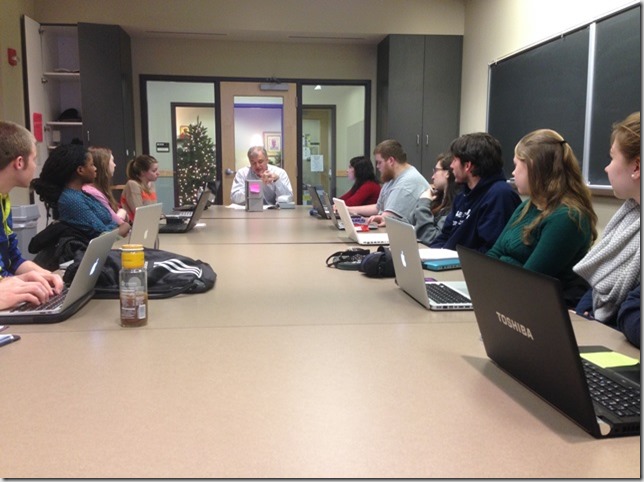
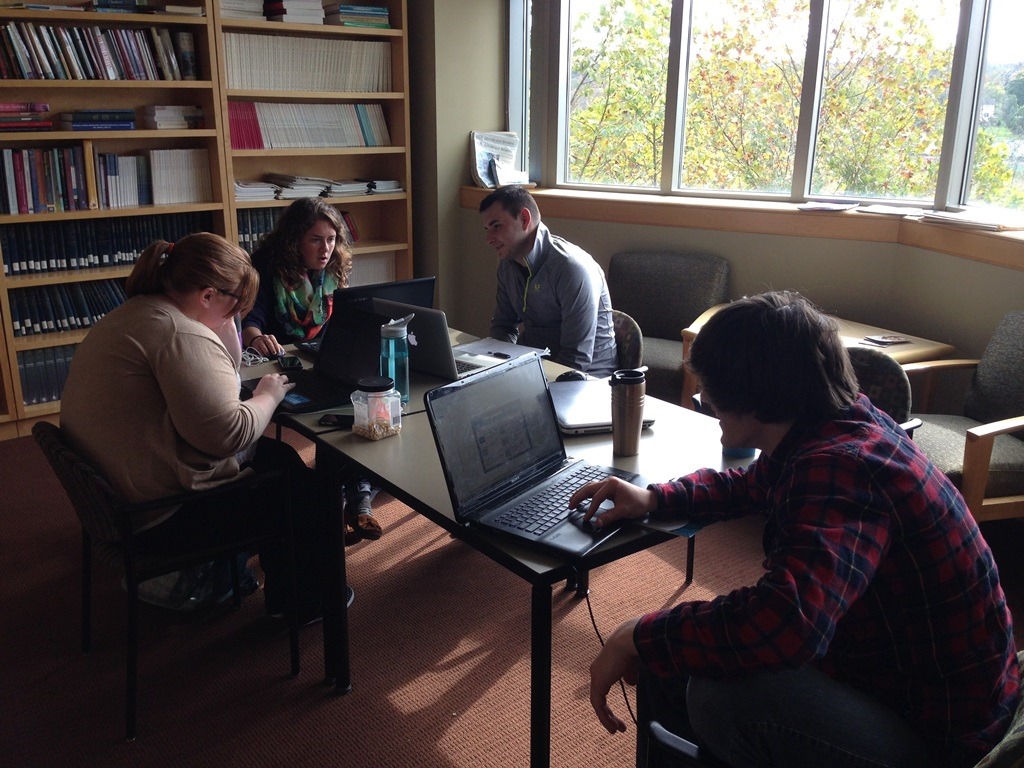
Since this initial burst of activity, our initiative has grown and expanded to embrace an array of collaborative digital and public humanities activities. We have maintained energy through a range of humanities and technology courses; work study positions, practicums, and internships; and Messiah’s Center for Public Humanities Student Fellows Program.
The initiative has been sustained primarily through ongoing financial support from the Office of the Dean of the School of Humanities and the School of the Arts, Culture and Society, and the Center for Public Humanities. The initiative has also benefited from regular support of the Office of the President, Office of Diversity Affairs, and the Department of History, Politics & International Relations at Messiah University. We acknowledge the past and present financial and administrative support of Drs. Todd Allen, Jean Corey, Bernardo Michael, Kim Phipps, Pete Powers, Emerson Powery, and Gladys Robalino.
The Digital Harrisburg Initiative has been funded by the Council of Independent College’s Humanities Research for the Public Good grant program for collaboration with the IIPT-Commonwealth Monument Project (2018-2020, 2023) and the McCormick Riverfront Library of the Dauphin County Library System (2023). A current Council of Independent Colleges Grant (2024) has funded efforts to preserve the products and output of the these earlier grants.
The Digital Harrisburg Initiative has been recognized with the National Leadership in History Award from the American Association for State and Local History (2021). A special issue of Pennsylvania History: A Journal of Mid-Atlantic Studies, which explored the theme of “Harrisburg, Digital History, and the ‘City Beautiful,'” earned a PAMuseums Institutional Achievement Award in 2021.
Products and Projects
Our activities and projects have included, among others:
- archival research and digitization of documents and images from the Pennsylvania State Archives
- an interactive map of Harrisburg residents in 1900
- an interactive street-view map of Harrisburg’s Old Eighth Ward in 1900-1915
- student projects and exhibits exploring Harrisburg’s City Beautiful movement, Susquehanna floods, clothing designers, racial redlining, restrictive covenants, and the Old Eighth Ward
- poetry workshops with local schools
- special issue of Pennsylvania History: A Journal of Mid-Atlantic Studies, on the theme of “Harrisburg, Digital History, and the City Beautiful”
- the Commonwealth Monument Project celebrating Harrisburg’s African American history, including a book titled One Hundred Voices: Harrisburg’s African American Community, 1850-1920 (The Digital Press: Grand Forks, 2020)
- the digital mapping of Lincoln Cemetery, Harrisburg’s oldest extant African American cemetery in collaboration with Saving Our Ancestors’ Legacy
- Story Maps on Thomas Morris Chester and The Chester Way
- video collections, documentaries, and interviews (some publicly available at the CPH YouTube Channel)
- a mobile app for exploring the capital region history called Harrisburg Historical
To connect with us, contact Dr. David Pettegrew, Professor of History and Archaeology and Coordinator of Digital Humanities at Messiah University.
 Digital Harrisburg