
One evening, in my excitement (and haste) to search for a placed-based digitization project, I came across the title “Pennsylvania State Lunatic Hospital.” Immediately, its history captivated me, and my research on Harrisburg State Hospital and its creation in Harrisburg thus began. For two days, I had the opportunity to practice careful research at the Pennsylvania State Archives and the Historical Society of Dauphin County Archives. Plenty of snapshots, detailed reading, and collecting of metadata later, I finally had sufficient sources to move forward with.
At both archives, I engaged with various subjects potentially useful for research. At the Pennsylvania State Archives, I skimmed three collections: a History File from 1851-2001, a Register of Female Patients from 1852-1884, and Graphic Images from 1848-1981. The history files were flooded with various brochures, magazines, speeches, newspapers, visitor handbooks, and images that conveyed the hospital’s history. From these selections, I digitized newspapers, speeches, and some images with my iPhone’s notes app.
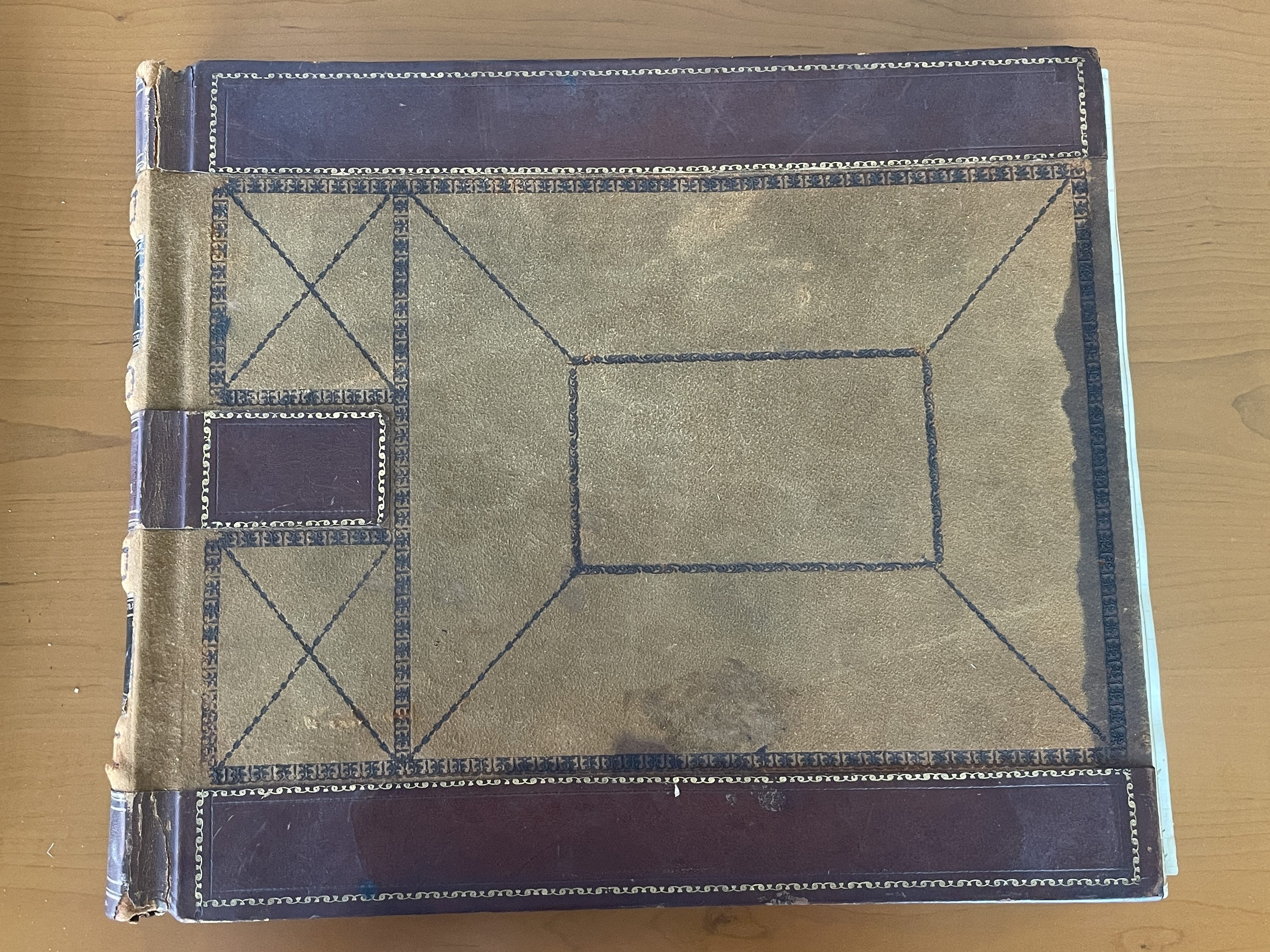
Other collections, like the Register of Female Patients, were fascinating. Initially, I was surprised to encounter such a large, rectangular book—and a heavy one—squeezed into a regular gray folder. I pulled the register from the folder, turned the delicate, yellow-stained pages, and read the faded, cursive ink recording female patients’ entry dates, illnesses, causes, and health status. Similarly, I relied on my iPhone’s note app to capture the texts.
In another box was the Graphic Images collection from 1848-1981, pooling with over fifty photographs. Similarly, its black-and-white images had faded into a yellow hue, but not enough to fade the images of male and female nurses, patients, institution grounds, laundry rooms, sleeping grounds, offices, and kitchens. From there, I selected a few images of nurses, bedrooms, physicians, and patients to digitize with the CZUR Scanner to capture high-quality images.
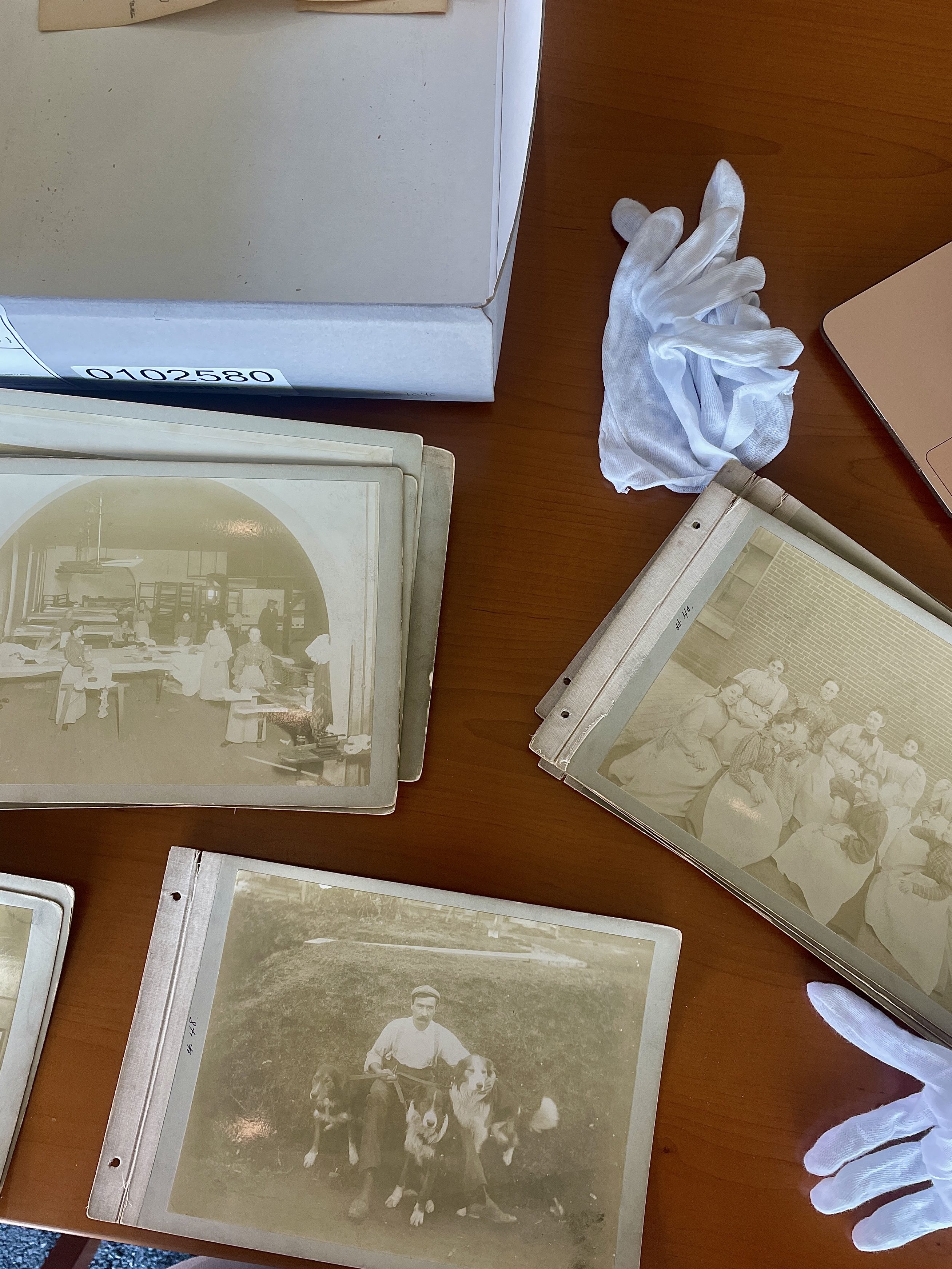
Pennsylvania State Archives, Harrisburg, 3 October 2024
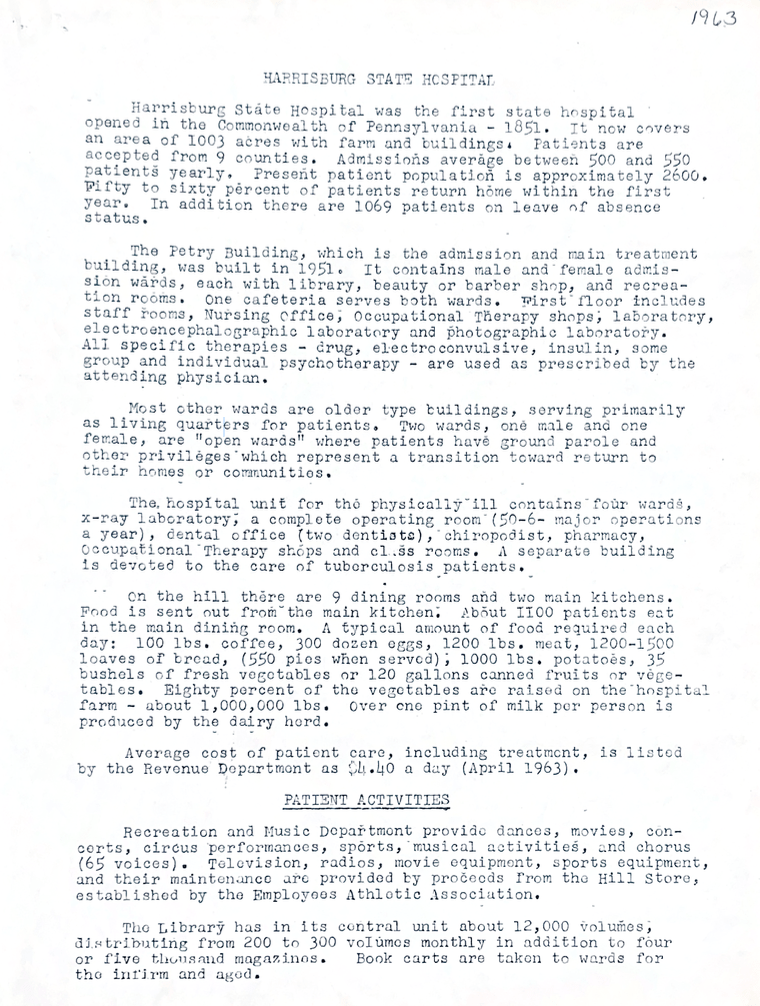
A week after this, our classroom ventured to the Historical Society of Dauphin County Archives and continued our research. The first collection I engaged with was another registered book with scattered pieces of paper and accounting ledgers that were not helpful for my research. After using the archive’s computer for additional research, though, I encountered helpful pieces. From there, I digitized graphic postcard images of the hospital, Dorothea Dix’s speech to establish the hospital in 1845, a letter by a hospital patient named William Smith, and another letter by a hospital patient named Sigmund Purist in 1865.
These—especially the letters—were fascinating to engage with. Dorothea Dix’s speech was over thirty pages long, so I used my iPhone’s notes app to capture the first few. Then, I used the CZUR scanner to capture higher-quality images of the postcards and the letters by William Smith and Sigmund Purist.

Historical Society of Dauphin County Archives, Harrisburg, 10 October 2024.
Honestly, I stepped into the archives looking forward to research without considering the challenges I would encounter. Under the time constraint of only two hours to read and research, I had to mindfully choose which sources were relevant and useful to spend time digitizing. Adam Crymble in Technology and the Historian (2021) describes this as “intentional archiving,” where historians must critically self-reflect on the sources they choose to gather and digitize in an archive where collections of sources seem endless (Crymble, 45). Because of my time constraint, I had to select the sources I wanted to digitize.
The sources I have chosen capture different perspectives of the hospital over different periods during its establishment. With these various sources—and others more that I will find on the web—I hope to rediscover the story of Harrisburg State Hospital’s beginning as a “Lunatic Hospital” as I examine its significance to its region and counter any false misconceptions about the institution. Hopefully, these sources will enthrall readers and cultivate curiosity about Harrisburg State Hospital’s once “Pennsylvania State Lunatic Hospital.” I will report again next month on the outcome of my project.
Sophia Snyder is a junior History major at Messiah, and is excited to share her experience working on Digital History projects.
 Digital Harrisburg
Asa
Hello,
Great
Hello, as a genealogist I have found many family members and others who were residents/patients at the hospital. Unfortunately, of my many hundreds of profiles created I have not kept a separate file for these individuals which may be of interest to you. But if you have names you could find some of that information by searching there or Family Search.
As I’m sure you have found, many people were sent there for other reasons other than mental health. Some were sent there for reasons as simple as they could not take care of themselves anymore and were sent to the hospital as there was no one else or nowhere else to house them (with an invented diagnosis to obtain approvals).
As I come across any of these individuals in the future I will try to make a separate file and then forward any that relate to what I have said to your attention.
Keep up the great work!
Mike
Mike Schindler
110 Fairview Drive
Camp Hill, PA 17011
717-737-9649 Cell 717-956-7490
“Keep a smile on your face, and a song in your heart”