By Phoebe Lemin
During the Fall semester of 2024 I was able to learn valuable and applicable skills through the Digital History course offered at Messiah University. During the course I learned the behind the scenes of website building, databases, and public outreach. The course involved practical assignments such as simple website reviews that helped me hone my ability in seeing the strengths and weaknesses of a website’s potential for public outreach. We also used some assignments to practice capturing high quality images of sources, and later creating metadata for said sources. My favorite assignment this semester was looking at the 1920s Harrisburg dataset in Excel which included 76,424 data entries. It was very interesting seeing so much data be simplified to singular values all due to straightforward functions.
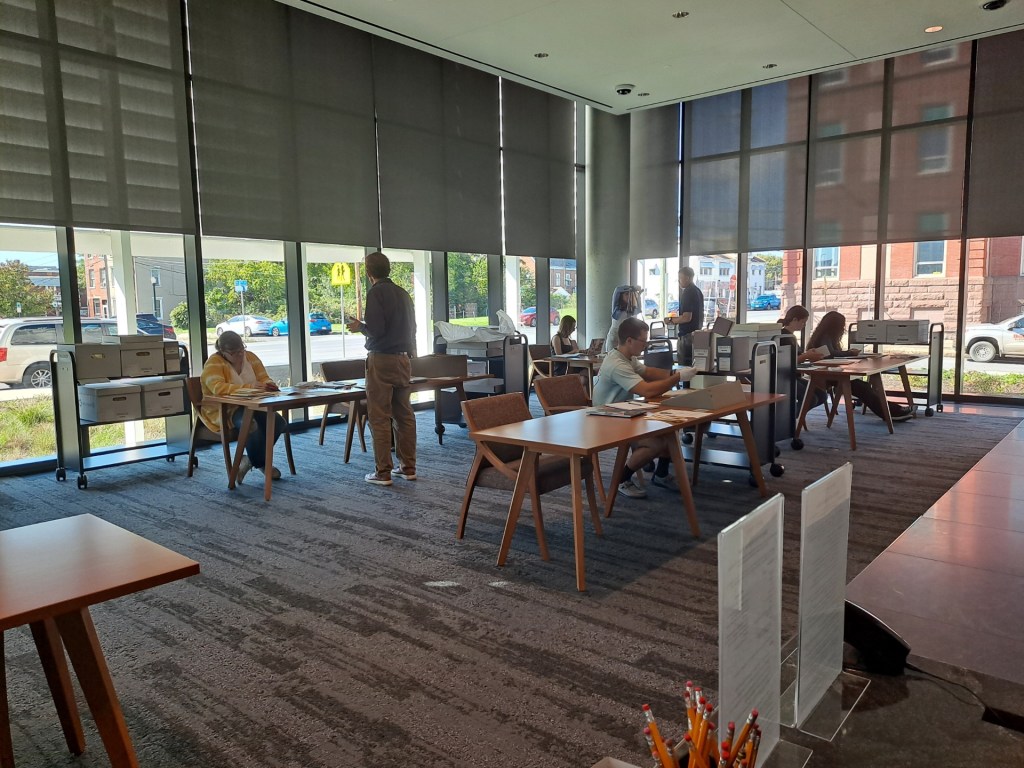
Students in Digital History at the Pennsylvania State Archives in October 2024 (photo courtesy of Tyler Stump)
The assignments that we were assigned aided me in the end project which was to create a Story Map website that has a place-based story related to Harrisburg. I chose to have my story based on the Botanist and environmental activist Mira Lloyd Dock. I was introduced to Mira Lloyd Dock briefly in my Spring 2024, Public History course. I knew she had a plaque within the Women’s Civic Club garden, and considering I had done research for one of the women in the garden already, I figured I should do research on another influential woman within Pennsylvania.
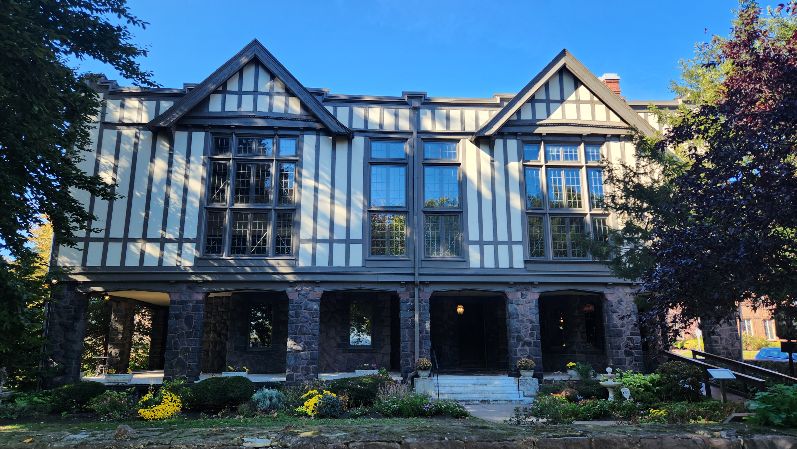
Photo of the Civic Club building in Harrisburg (photo by author)
In order to prepare to create a website related to Mira Lloyd Dock’s influence in Harrisburg I had to gather relevant source material that would be original and related to the locations in Harrisburg that she had influence in “beautifying.” Dr. Pettegrew took the Digital History students to both the Harrisburg Pennsylvania State Archives as well as the Historical Society of Dauphin County so that every student could gather high quality images and resources for their final project. While at the archives I gained valuable skills in time management and information organization. At the State Archives I primarily looked at Mira Lloyd Dock’s commitments to organizations and letters to peers. These letters and oaths were vital to my research as it helped display just how dedicated and renowned Mira Lloyd Dock was for her activism in the city.
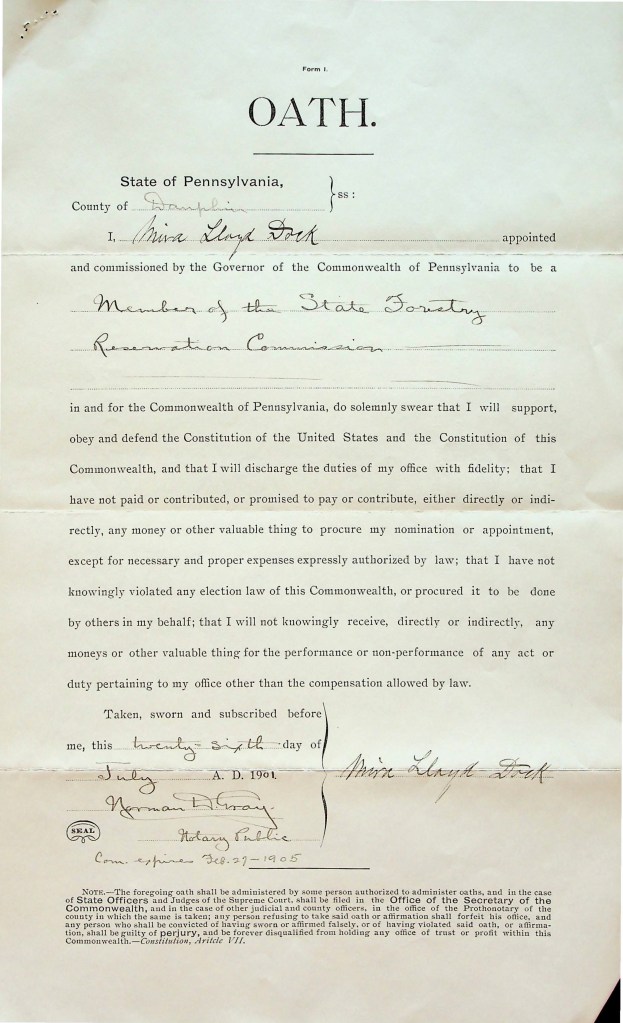
Scan of oath of Mira Lloyd Dock (courtesy of Pennsylvania State Archives)
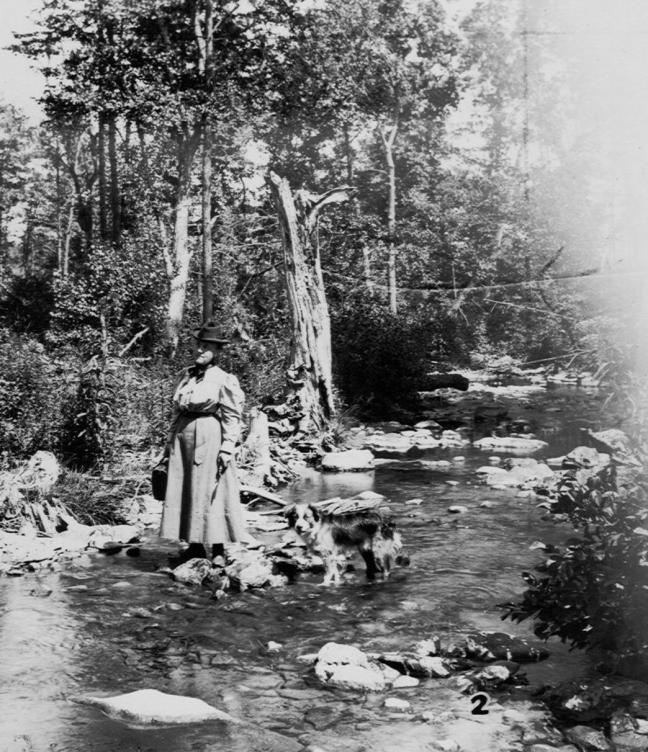
The Dauphin County archives were useful as I was able to gather photographs that added a visual of the change that Mira Lloyd Dock brought about. I also found photographs of Dock herself. I consistently found sources that described her appearance in a rather rude manner so I wanted to find images of her so that anyone that does outside research could see for themselves how she looks. At both archives I really felt a time crunch, and I learned that preparation is key to gathering data. I also had to figure out each archive’s way of organizing documents and images and the archivists were kind enough to help me navigate their online archives for sources. The organization of resources into fonds, series, folders, and then items became immensely helpful when creating metadata as I could easily find my data based on the alphabetic and numeric value that accompanied the data. Once I completed my research in the archives, I finalized my research within Murray Library and in Newspapers.com.
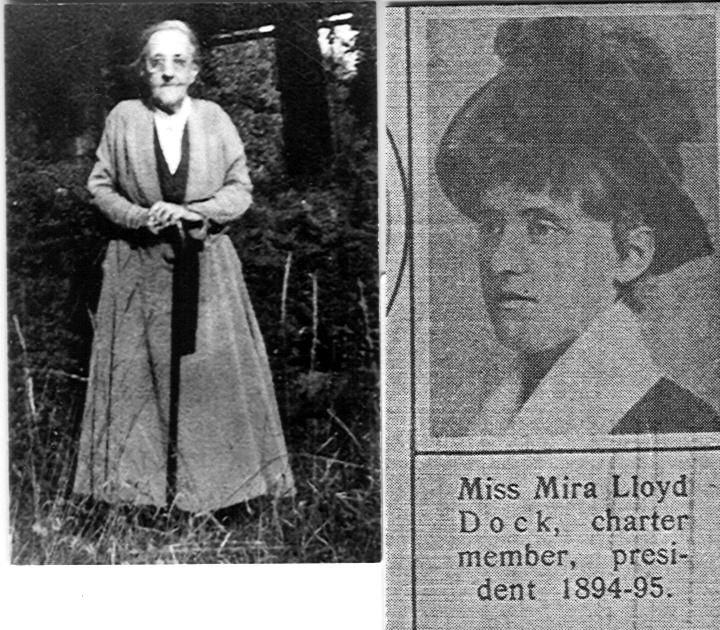
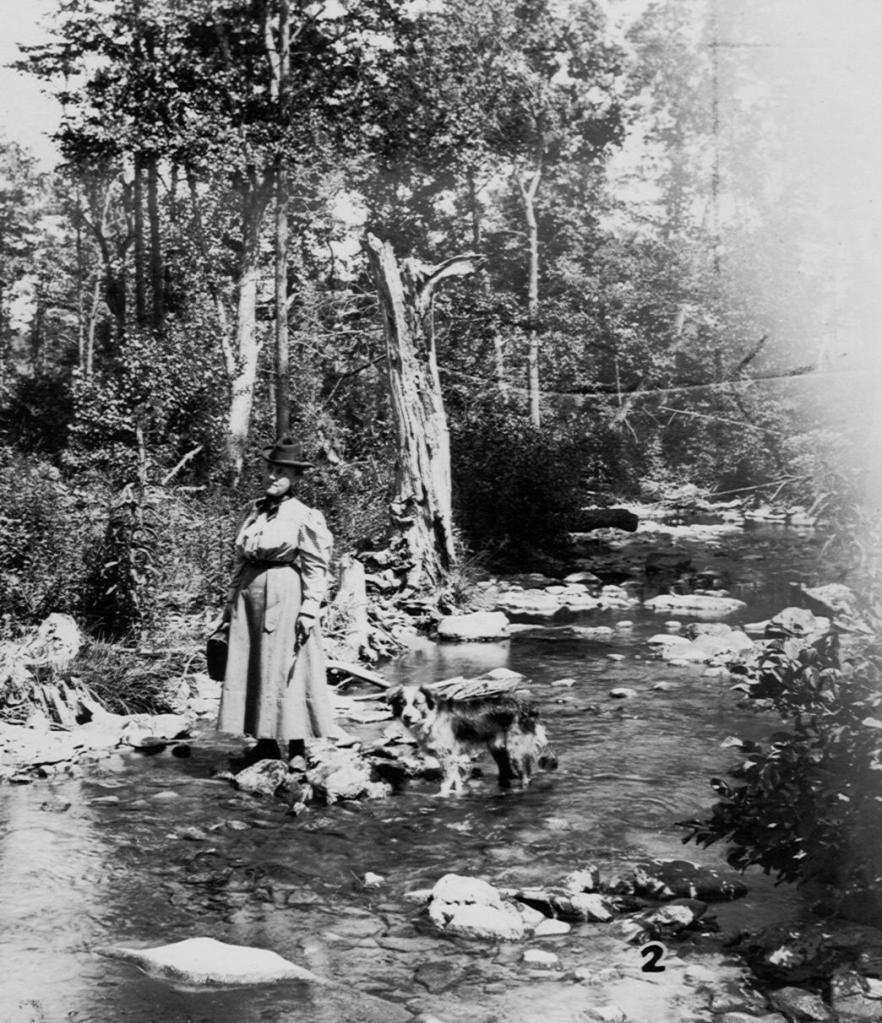
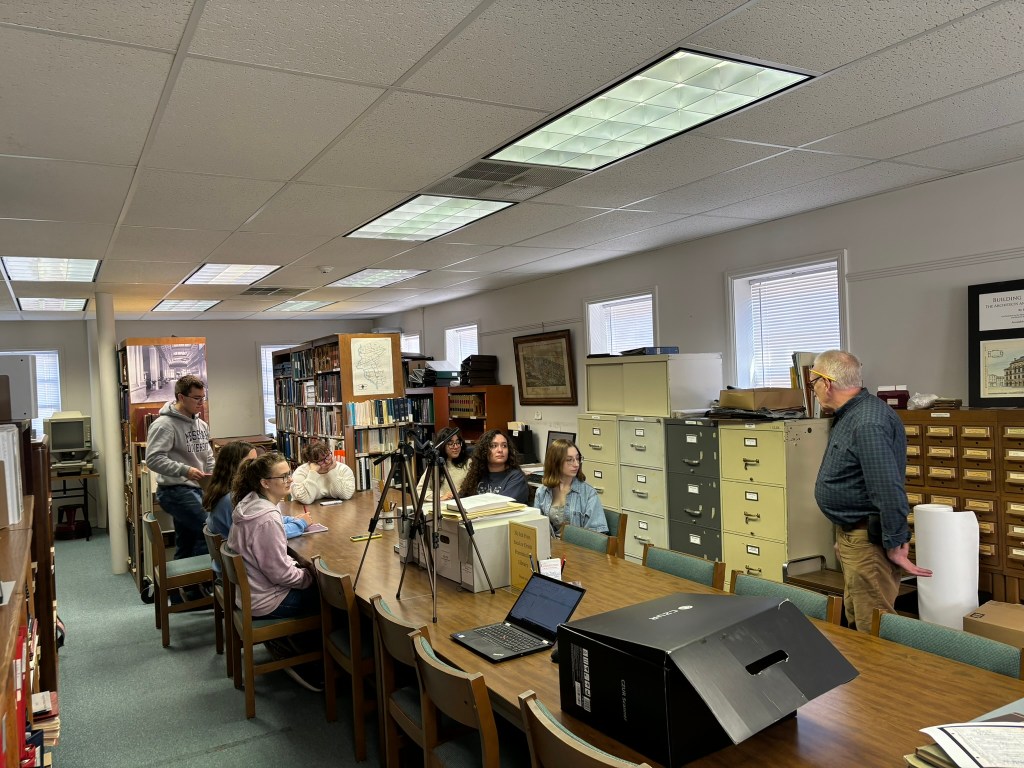
Two photos of Mira Lloyd Dock (courtesy of Historical Society of Dauphin County) and Photo of Students in Digital History at the Historical Society of Dauphin County in October 2024 (photo courtesy of Dr. Pettegrew)
In the end I was able to create a Story Map website which encompasses Mira Lloyd Dock’s involvement at the Women’s Civic Club, Glenn Summit Chapel, the River Front Steps, Wildwood Park, and the Capitol Park Extension. She was a cofounder of the Women’s Civic Club, someone who campaigned for the “City Beautiful Movement,” an advocate for cleaner water, a friend of Warren Manning and J. Horace McFarland. Her skill in public speech, her ability to campaign, and her continuous support for her peers is what majorly helped progress the “City Beautiful Movement.”
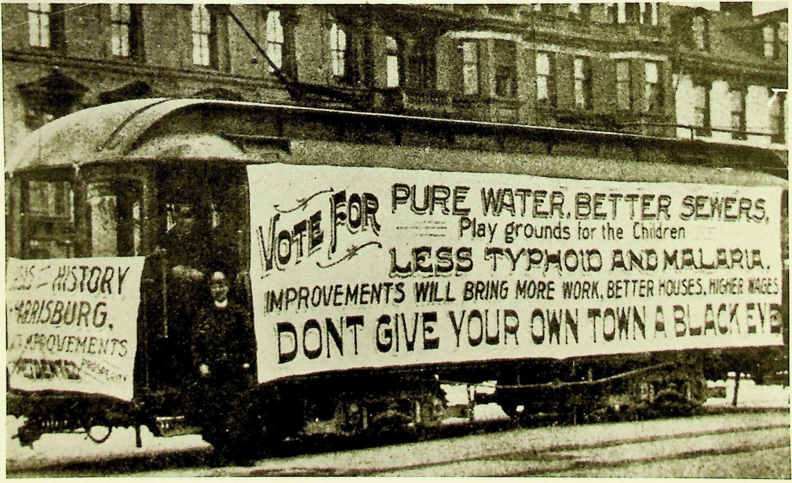
Photo of Trolley Car/Decorated with City Beautiful Signs (courtesy of Historical Society of Dauphin County)
To learn more about Mira Lloyd Dock and her visible impact in Harrisburg, please read more at my StoryMap website Here.
Phoebe Lemin is now a Senior Public History major at Messiah University with a minor in Art History. She is currently a Humanities Fellows Student for the Center for Public Humanities and a Library Assistant, Public Services for Murray Library for the Fall of 2024.
 Digital Harrisburg