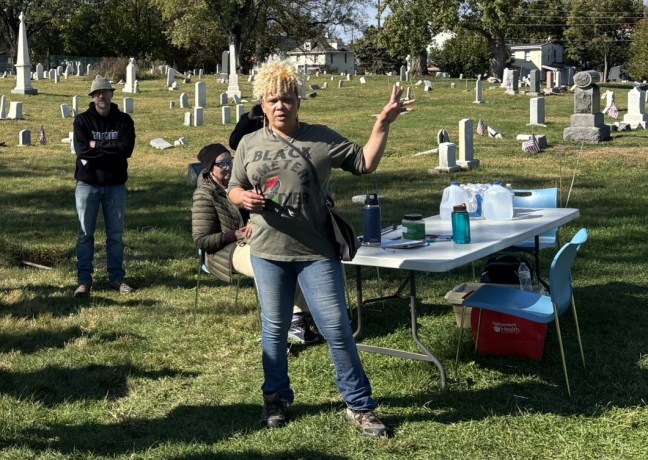
Editor’s note: This is the final post in a series of essays of the Center for Public Humanities at Messiah University that highlights the voices of activists, educators, and community leaders in the Harrisburg area who are advancing civil rights and preserving history. The series, titled “The Lenwood Sloan Impact,” is named in honor of the late visionary, Lenwood Sloan, whose partnership with Digital Harrisburg and the Center for Public Humanities over the years deepened our work and profoundly impacted us. This feature essay focuses on Rachael Keri Williams, founder of Saving Our Ancestors’ Legacy (SOAL), whose work is dedicated to restoring Harrisburg’s Lincoln Cemetery and reclaiming African American histories that have long been overlooked. For earlier essays in the series, see “Catalytic Agents: The Lenwood Sloan Impact,”“Reflections on Equity, Parity, and Justice: The Impact of Mr. Lenwood Sloan,” “On Bryan Wade’s Underground Railroad Documentary: Preserving African American History Through Storytelling,” and “On Dr. Todd Allen’s Civil Rights Bus Tour: Bridging History, Faith, and Community.“
Rachael Keri Williams is a public historian, community leader, and descendant-advocate whose work centers on preserving African American burial grounds and reconnecting families with their ancestors. As the founder of SOAL, a grassroots nonprofit established in 2021, Williams leads efforts to restore Lincoln Cemetery. Lincoln Cemetery is Harrisburg’s oldest remaining historically African American burial ground. Through restoration, genealogical research, and community engagement, her work reflects a clear and urgent purpose: to ensure that the lives, stories, and legacies of those buried there are not forgotten.
The Discovery That Sparked a Movement
That purpose took shape in June 2021, when Williams visited Lincoln Cemetery while searching for her own family members. What she encountered was not simply neglect, but devastation. Human bones were exposed on the ground, graves had collapsed, headstones were toppled, and the land was overtaken by severe overgrowth and animal damage. After contacting the coroner and local authorities, only to encounter jurisdictional challenges, Williams recognized that something deeper was at stake. The condition of the cemetery reflected not only years of abandonment, but broader systemic barriers that have prevented communities from remembering and preserving African American history.
Rather than turning away, Williams and a group of community members began organizing cleanup efforts. What started as a response to the crisis quickly evolved into a structured initiative. By November 2021, SOAL was formally established to coordinate restoration, research, and preservation efforts at Lincoln Cemetery. She summarizes the work with one word: “daunting”. Spanning roughly seven acres, the site required extensive labor, resources, and time. Overgrowth, landscape challenges, and a limited supply of volunteers made the process difficult. Yet for Williams, the work was necessary. As she emphasizes, the cemetery represents “not just the soldiers’ history, but everyone’s.”
Lincoln Cemetery and Community Memory
Founded in 1877, Lincoln Cemetery holds the remains of more than 10,000 African Americans, including formerly enslaved individuals, abolitionists, Civil War veterans, educators, clergy, and community leaders. Many were reinterred there after burial restrictions in the nineteenth century displaced earlier Black burial grounds within Harrisburg. Today, the cemetery stands as one of the most historically significant African American sites in central Pennsylvania.
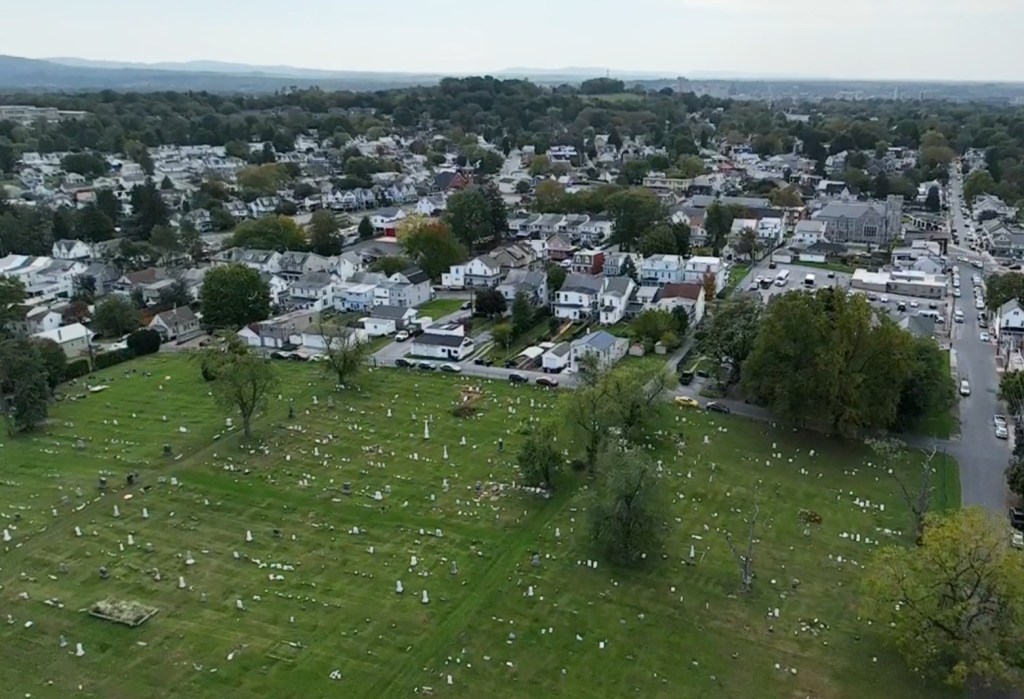
For Williams, however, its importance extends far beyond its historical record. She describes the cemetery as a “liminal space”. The cemetery serves as a place that exists between life and death, past and present. It is a space of “crossing boundaries,” where ideas, political values, and lived experiences intersect. In this sense, Lincoln Cemetery becomes more than a burial ground; it is a place of connection, education, and imagination. It is where communities can learn from the past while also shaping the future. As Williams explains, it is a space that fosters “a sense of imagination and creativity,” while also grounding visitors in the strength and resilience of those who came before.
SOAL in Action
Through SOAL, Williams has led a wide range of restoration and research efforts aimed at preserving both the physical and historical integrity of Lincoln Cemetery. Volunteers have restored more than 400 headstones, recovered over 1,000 sunken markers, and conducted large-scale cleanup efforts across the site. At the same time, the organization has documented more than 4,000 individuals within cemetery records and contributed to family tree databases that include over 15,000 people.
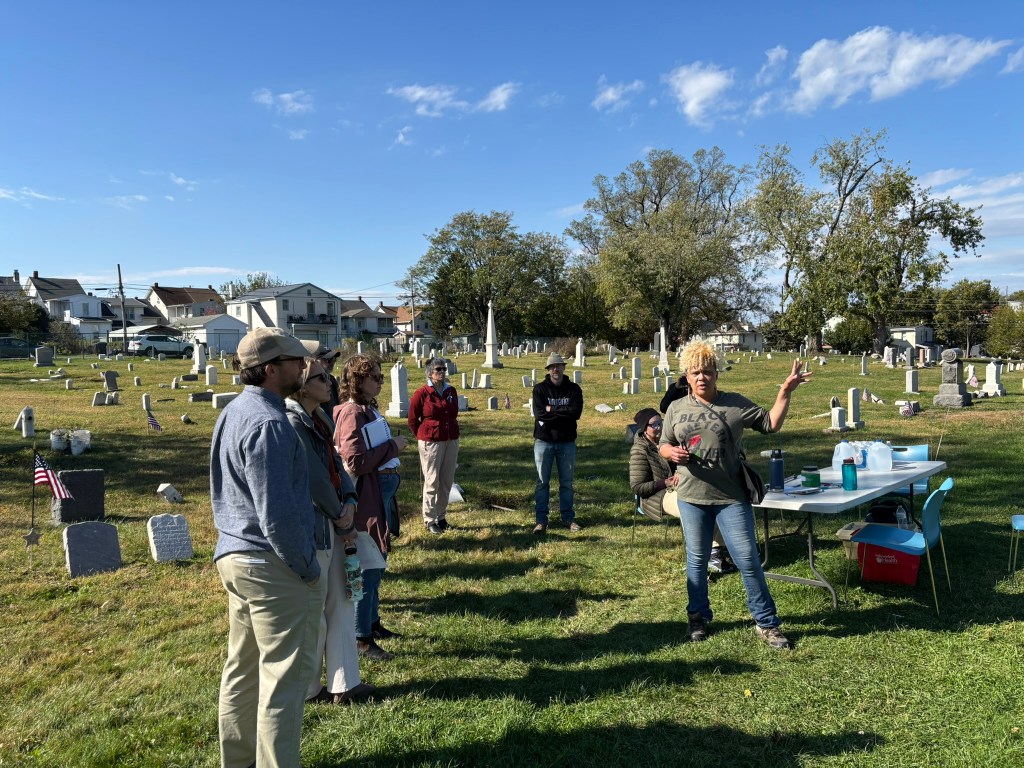
This work is not limited to physical restoration. SOAL also focuses on uncovering lost histories and reconnecting descendants with their ancestors. Through genealogical research, cemetery mapping, and digital archiving, the organization is working to make these histories accessible to families and communities. Partnerships with institutions such as Messiah University, Harrisburg University, Kutztown University, and Pennsylvania Hallowed Grounds have supported these efforts through research collaboration, student involvement, and preservation planning.
Williams also emphasizes the importance of community engagement, particularly among younger generations. Restoration weekends often include students and volunteers who gain hands-on experience while learning about African American history. These moments represent an opportunity for individuals to connect with the past in meaningful and tangible ways.
Radical History Reclamation
Central to Williams’s work is what she calls “radical history reclamation.” For her, this concept is not about rewriting history, but about restoring it. It involves uncovering narratives that have been erased, neglected, or intentionally overlooked, and ensuring that they are told truthfully and without apology. As she explains, this work “doesn’t mean reclaiming history to be punitive,” but rather recognizing that these stories “need to be told.”
This approach also challenges the idea that permission is required to share these histories. Williams emphasizes that communities should not have to “ask for permission” to tell their own stories or to honor their ancestors. In this way, radical history reclamation becomes both an act of preservation and an act of empowerment. It confronts historical erasure while creating space for descendants to reclaim their narratives.
Technology also plays an important role in this process. From digital mapping to genealogical databases, SOAL is exploring new ways to document and share information. These tools not only preserve history, but also expand access, allowing individuals from across the country to connect with Lincoln Cemetery and their own family histories. Students in the CPH fellowship program at Messiah University have contributed to this effort through ArcGIS mapping, working to document and map as many graves as possible. Their data collection and entries have now been completed and will be uploaded for public viewing in the coming months, further opening access to this important history and strengthening connections between the past and present.
Looking Ahead
Looking toward the future, Williams envisions expanding SOAL’s work through the development of a broader digital network that connects social history, genealogy, and archival research. This includes efforts to link descendants of Civil War veterans, widows, and families through national records such as those housed in the National Archives in Washington, D.C. By integrating historical data with modern technology, she hopes to create a more comprehensive and accessible record of the past.
At the same time, Williams remains committed to investigating the physical and historical details of the cemetery itself. This includes studying headstones, inscriptions, and burial patterns—many of which have been difficult to interpret due to fading or damage. For African American families in particular, these challenges reflect a larger history of erasure and exclusion. Through continued research and advocacy, Williams hopes to address these gaps and work toward forms of historical recognition and repair.
Ultimately, her vision is rooted in connecting the past and present, between individuals and their ancestors, and between communities and their shared histories. Lincoln Cemetery, in her view, is not simply a place of loss, but a place of gathering, reflection, and growth.
This story was researched and authored by Sarah Lee Meeks, a senior undergraduate student at Messiah University, with interviews conducted by the author.


Thank you for the continued collaboration and learning alongside SOAL. We are achieving against the odds because of partnerships like Messiah University and Harrisburg University. Our shared research and documentation is so important because generations of segregation, economic exclusion, migrations, and uneven preservation investment disrupted many families’ connections to Lincoln Cemetery and to the records, places, and community institutions that preserved their ancestors’ histories.