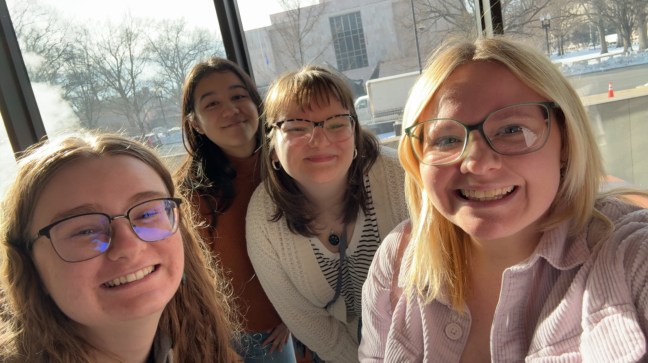
As I reflect on my time at Messiah University, nothing brings me a greater sense of accomplishment than my experience as a fellow with the Center for Public Humanities. I joined the fellowship in the spring of my sophomore year, and now, as I complete my final semester, I can see just how deeply this program has shaped both my academic and personal journey.
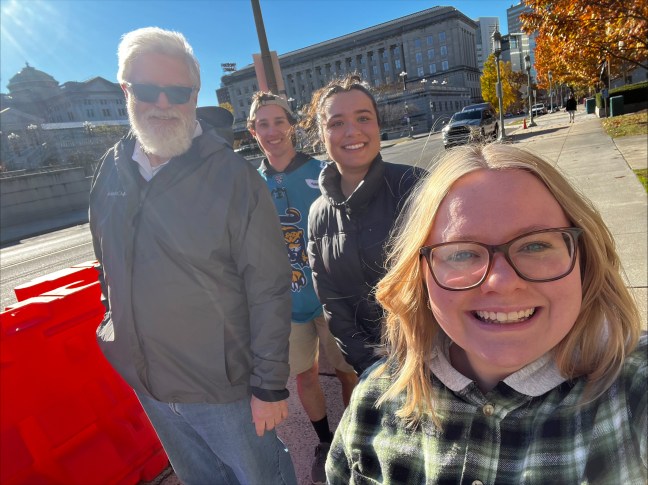
My time in the fellowship began under the leadership of Dr. Jean Corey, the former director of the Center. She was a bright light to her students and although I did not know her well, I could tell she was someone who not only taught but inspired. Under her guidance, I explored Harrisburg’s historical landmarks and discovered a passion for article writing that I didn’t know I had. Those early experiences grounded me in the work of public humanities and showed me how stories, when told well, can connect communities to their history.
By my junior year, the program began transitioning to new leadership under Dr. Pete Powers. This shift marked a new chapter for me. Dr. Powers recognized my interest in writing and community engagement and encouraged me to expand my skill set into social media design and outreach. Through his mentorship, I grew more confident in my abilities and began to feel a deeper sense of belonging within the program. I wasn’t just participating anymore—I was contributing.
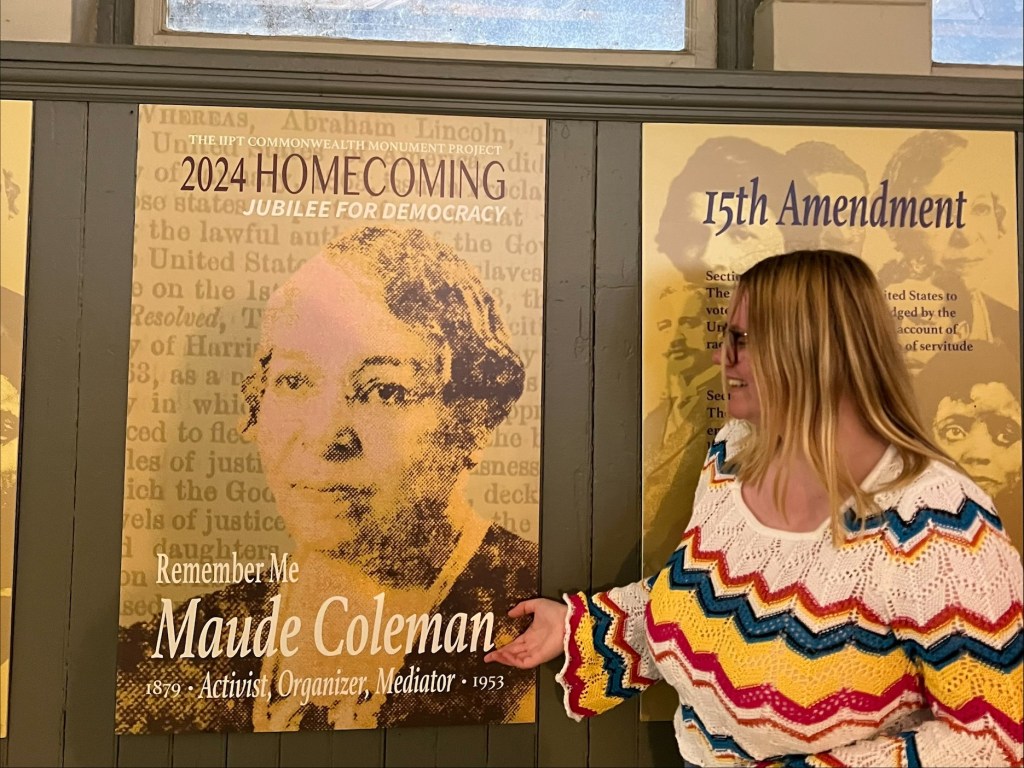
During this time, I worked on a research piece highlighting Maude Coleman, an extraordinary Black woman and member of the Harrisburg YWCA who played a significant role in the city’s history. With the support of Dr. David Pettegrew, my research was refined, amplified, and ultimately published in an article on the Phyllis Wheatley YWCA. Seeing my name attached to my own work for the first time was unforgettable. It was a moment of validation—a reminder that my voice, my research, and my perspective mattered.
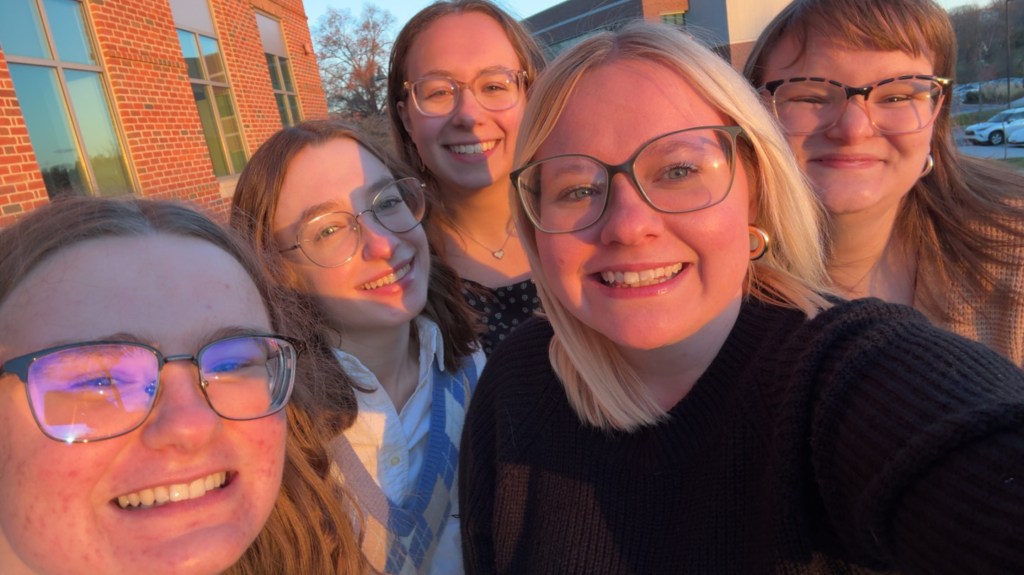
Equally meaningful were the relationships I built along the way. Fellow students like Isa Kerns and Phoebe Lemin, who began the program around the same time as me, became sources of encouragement and inspiration. Their confidence pushed me to believe that I, too, could make a meaningful impact within the Center, at Messiah University, and in the broader Harrisburg community. As new fellows joined in the spring, that sense of community only deepened. Together, we shared a passion for advocacy, research, and storytelling, and we challenged one another to grow.
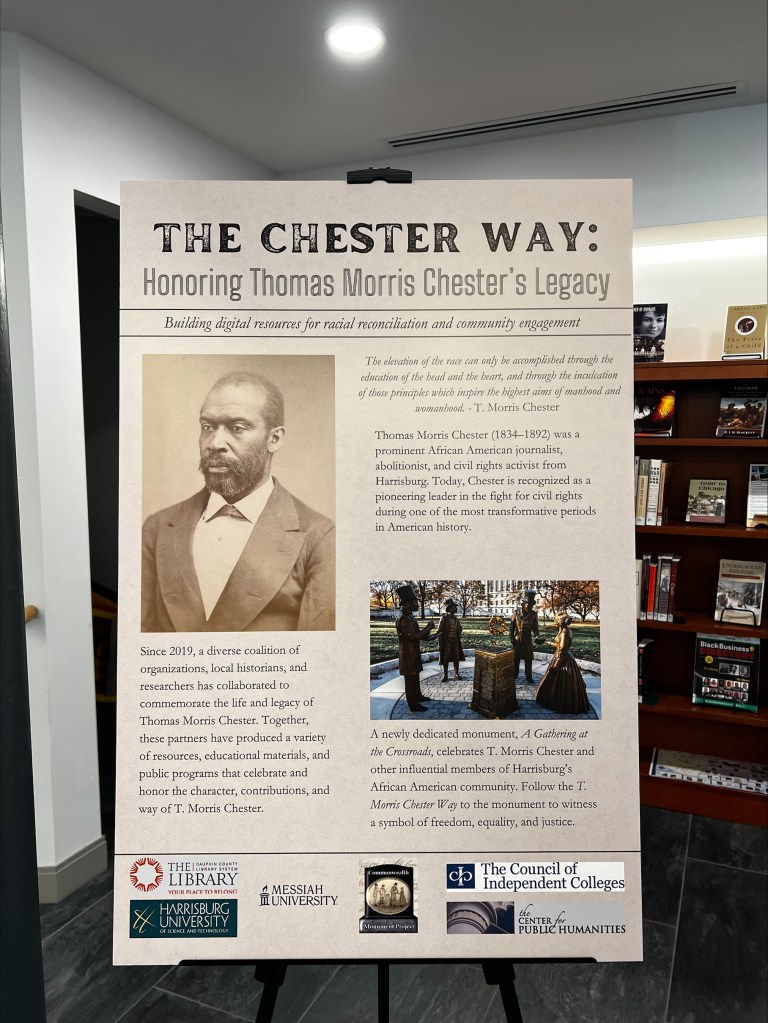
One of my favorite projects was the Thomas Morris Chester Way collaboration. This project involved designing two posters that told the story of Thomas Morris Chester, a prominent African American figure in Harrisburg. Chester was a journalist, lawyer, and Civil War correspondent who used his writing to advocate for civil rights and represent Black voices during a time when they were often ignored. One of my posters focused on his life and legacy, while the other provided resources for further exploration into Harrisburg’s Old Eighth Ward and the many voices that have shaped the city’s history. During my junior year, I also had the opportunity to create a small exhibit for the Dauphin County Library System based on this work. This project, which has been displayed at the McCormick Riverfront Library, required a lot of research and time dedicated to understanding the legacy he left in Harrisburg. After all, there are streets and buildings named after him. I really enjoyed learning about his impact and seeing a physical product come out of that work.
Senior year brought both challenges and clarity. I knew I wanted to push myself further—to create something lasting and meaningful. After conversations with fellow students, Dr. Powers, and Dr. Pettegrew, we developed an article series for the Center’s blog and website titled “The Lenwood Sloan Impact” . Named in honor of the late Lenwood Sloan—a visionary whose partnership with Digital Harrisburg and the Center profoundly shaped our work—the series became one of the most impactful projects I have been a part of.
Each article in the series focused on individuals continuing Sloan’s legacy through their work in the community. I wrote about Bryan Wade and his documentary storytelling, Dr. Todd Allen and his leadership, and Rachel Williams of SOAL, among others. Each piece required hours of research, interviews, and careful listening. More importantly, each story revealed resilience—stories of challenges faced, barriers overcome, and a deep commitment to community impact.
Through these conversations, I began to better understand my own purpose. The work was no longer just about writing or research—it was about honoring people’s stories and ensuring their impact is seen and remembered. These individuals reminded me why I began this journey in the first place.
As I prepare to leave Messiah University, I carry with me more than just the skills I’ve gained through the Center for Public Humanities—I carry the stories, the relationships, and the responsibility that comes with both. This fellowship has shown me that public humanities work is not just about preserving the past, but about engaging with the present and shaping the future. I leave with a deeper understanding of my own voice and a commitment to continue using it to uplift others, just as this program has done for me.
This post was written by senior CPH Fellow Sarah Lee Meeks, who graduates this month with a B.A. in Human Development and Family Science. She has been part of the fellowship program since her sophomore year. All work was written and edited by the author.

