
Technology can be difficult to use, but it can also be a tool that can help us create something beautiful. The process of digitization is no different. The use of technology among historians has grown a lot during the past several decades and has allowed for a new advances and discoveries to be made.
For my Digital History class this fall, we were instructed to choose a subject that would go on to be part of our final project. This project was to take this subject, go to an archive, and digitize some things we found that related to the topic. We would then use this information to produce our final project.
For my research project, I decided to look at the life and legacy of Judge and Pennsylvanian politician Genevieve Blatt. She was a Pennsylvanian politician who was the first woman to win the seat of Secretary of Internal Affairs in PA. Through this work, she broke the glass ceiling and demonstrated that women were just as capable as men in the field of politics. I chose her because I am always interested in finding women that challenged the social norms and how they impacted their countries.
With this information in mind, I headed to both the Pennsylvania State Archives and the Dauphin County Archives to conduct my research.
My research in the PA State Archives consisted of lots of different collections, all surrounding Genevieve Blatt, her life, legacy, and her impact on politics in the 20th century. I digitized a lot of one specific collection which were the papers and personal belongings of Genevieve Blatt and her family. This collection was mostly filled with her personal memorabilia such as menus she saved from trips she went on, items that were given to her at the passing of her mother and notes she received during her time in office.

Photo of a certificate of enrollment that was sent to Genevieve at the passing of her mother, Clara. (Photo by author)
Because Genevieve Blatt was not a native to Dauphin County, there were few things of hers that were at the Dauphin County Archives. There were a couple of smaller collections that I found that turned out to be really profitable and I was happy with what I found.
The collections included pictures of Genevieve Blatt along with other people, a menu from a dinner party the Democratic party held, and 2 different official documents from meetings that Genevieve wrote herself. These collections included a menu, official legislative documents, a photograph of her photograph hanging at a Democratic event where JFK was present, and a photo of her with Gov Scranton.
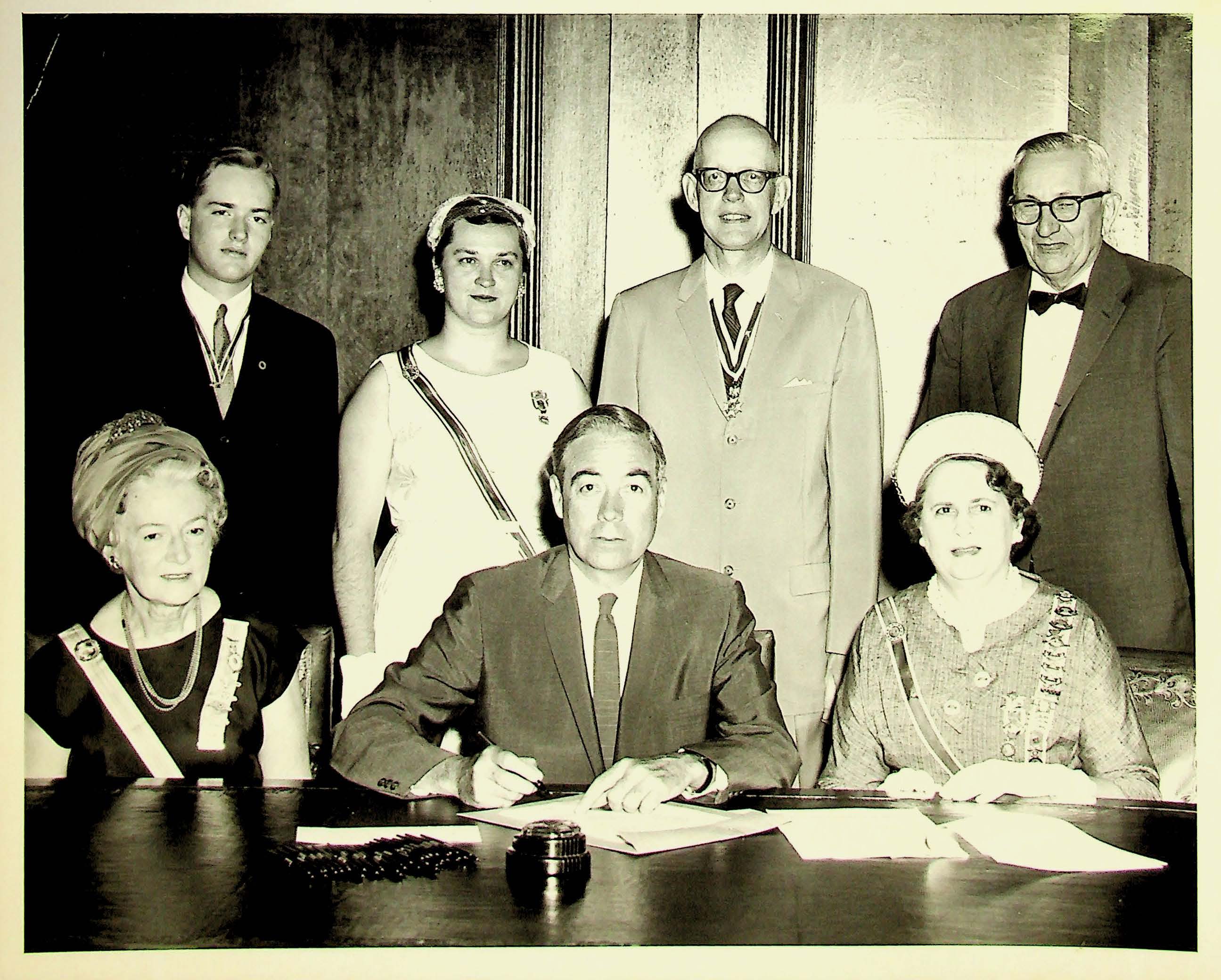
Photo of Genevieve Blatt (far right) with others, including Gov Scranton. (Photo by author)
Time seemed to be my worst opponent when it came to working in the State Archives and the Dauphin County Archives. I didn’t realize how long it would going to take to sift through the material that was brought to me and choose which pieces I wanted to digitize. I think that the time it took me to identify the collections was well worth the time and effort put in. For the digitization process, I digitized all my items by using both my notes app on my phone to create PDFs of the documents and by using the CZUR scanner that we brought to the archives with us.
The stories I hope to tell with these pieces are the stories of Genevieve’s life and how she went from just an ordinary woman to the ‘first woman in PA politics’ as she is often referred to. I want to show the impact of her life and legacy and how she got into politics. I hope I can show the progression of women in the field and how Blatt spurred on change within her community.
One of the readings we have done in class connects with the process of digitization. Authors Sheila A. Brennan and T. Mills Kelly discuss the process of digitization and how that can affect history, which pulls from the writings of Dan Cohen and Roy Rosenweig in their book, Digital History. What they have determined is there are multiple different things that need to be taken into account when creating an online archive of digital material. They say that historians need to be aware of the challenges that housing collections online present.
“We sort the challenges of creating, managing, and sustaining a digital collecting history project into four main categories: collecting content; technical issues; attracting visitors to your site and building trust with potential contributors; and if your project is one focusing on a tragedy or disaster as ours was, allowing those most directly affected time to heal before they can share” (Brennan and Kelly).
You have to take into account all of these things in order to have a successful digitization process and even a successful internet archive. They say that digitization is an important yet difficult process, but it is a rewarding one nonetheless.
Maddie Graham is a sophomore. She is majoring in Public History and minoring in Art History at Messiah University. When she isn’t writing about women’s history, she’s probably reading, napping, or dreaming of her next project.
 Digital Harrisburg
2 thoughts on “Processing Paper Into The Digital: The Life of Genevieve Blatt”